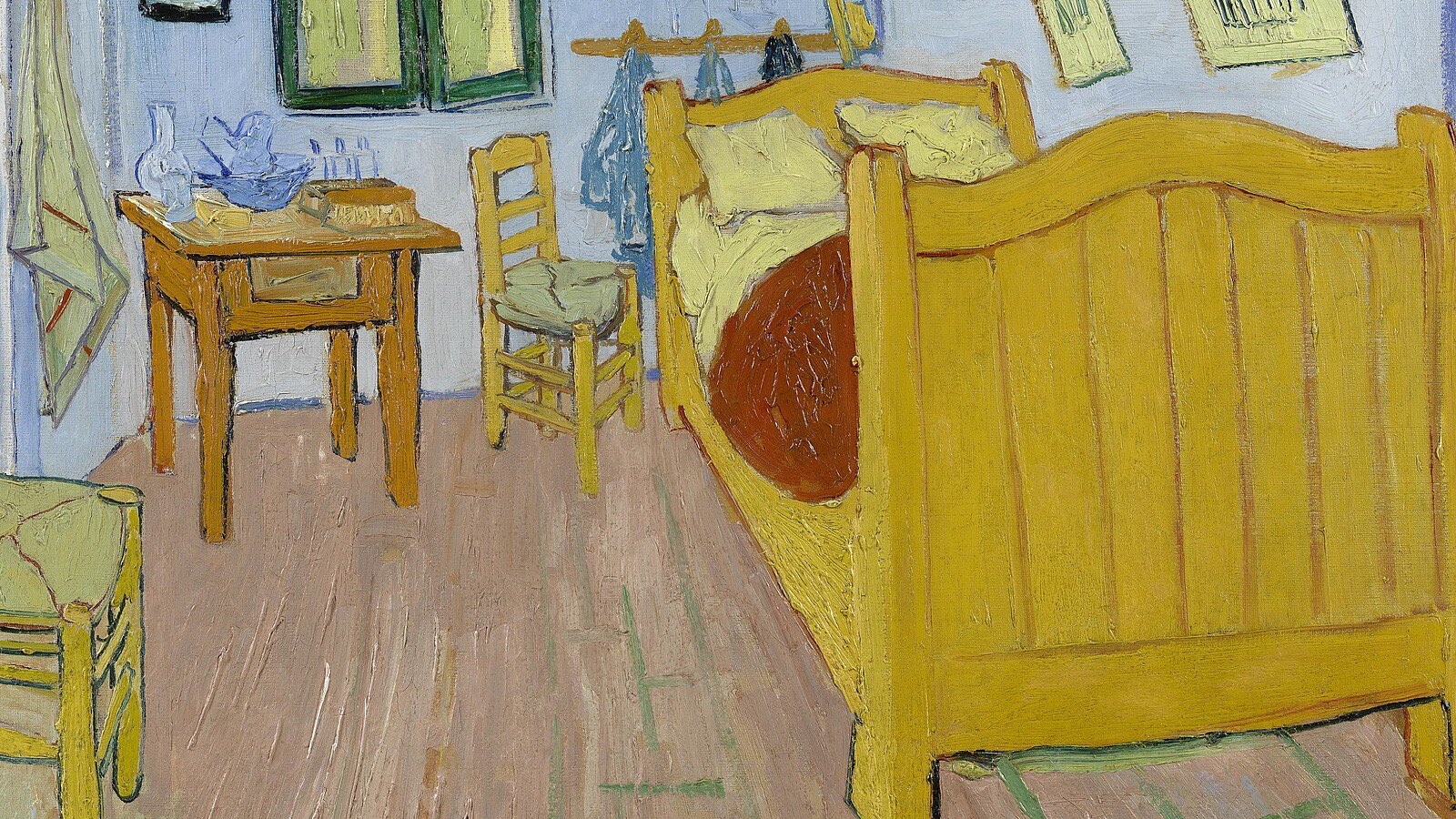
The definition is mostly a list of what the picture is not
Genre painting is the term for pictures of ordinary life. Tate's art-terms entry puts it in one line: "The term genre painting refers to paintings which depict scenes of everyday life."
The hard part is the boundary. The National Gallery in London reaches for the same construction twice when it has to separate a genre painting from a portrait. Of Murillo's A Peasant Boy leaning on a Sill it writes that although the boy is very lifelike, "this is not a portrait. It is a genre painting that provides a momentary glimpse of everyday life in Seville." Of Greuze's A Girl it says the picture "may look like a portrait" but is probably a genre painting, "an image of a type."
A lifelike figure is not enough to make a portrait. The category turns on whether the picture claims a named sitter. A genre painting shows a type: a maid, a card player, a surgeon at work, a child holding an apple. That is a different job from the portraits that record a named sitter, where the identity of the person in the frame is the whole point. Tate records where the form took hold, in Holland in the seventeenth century, and notes that the pictures were usually small and often showed peasant life or drinking in taverns.
The academies ranked the category, and ranked it low
Genre painting is one of five categories that seventeenth-century theorists sorted pictures into. Tate lists them as history, portrait, genre, landscape and still life, and is explicit that the order carried weight. The ranking came from the French Royal Academy, and Tate gives the reasoning behind it: landscape and still life sat at the bottom "because they did not involve human subject matter," while history painting took the top because it "dealt with the noblest events of human history and with religion."
The Metropolitan Museum of Art dates the codification in its Heilbrunn essay on genre painting in Northern Europe. The Academie Royale de Peinture et de Sculpture was founded in 1648, and by then, the essay says, the hierarchy of arts "was firmly established and upheld by critics throughout Europe."
Not every writer used five rungs. The Dutch artist and writer Samuel van Hoogstraten, in his 1678 Inleyding tot de hooge schoole der schilderkonst, sorted painting into three grades. Still life came last, as it "relied primarily on direct observation and skill," and history came first, as it "was believed to require imaginative genius for its execution." The pictures of everyday life sat between them, on what the Met calls "the huge middle rung."
The two schemes agree on the ends of the scale and differ about the middle. Neither puts ordinary life at the top.
The painters had no name for what they were doing
At the time the pictures were being made, there was no general term for them. The Met's essay is direct about it: the form took the middle rung of the hierarchy, yet it "then lacked a general term."
The essay adds a date, and hedges it: "the word genre was probably used in this sense for the first time toward the end of the eighteenth century by French writer Quatremere de Quincy." The hedge is the Met's, and it should be kept. A narrower claim does not depend on it: the label arrived after the pictures did.
The Dutch had words for the pictures, just not one word covering all of them. The Met quotes kleyne beuzelingen, "little trifles."
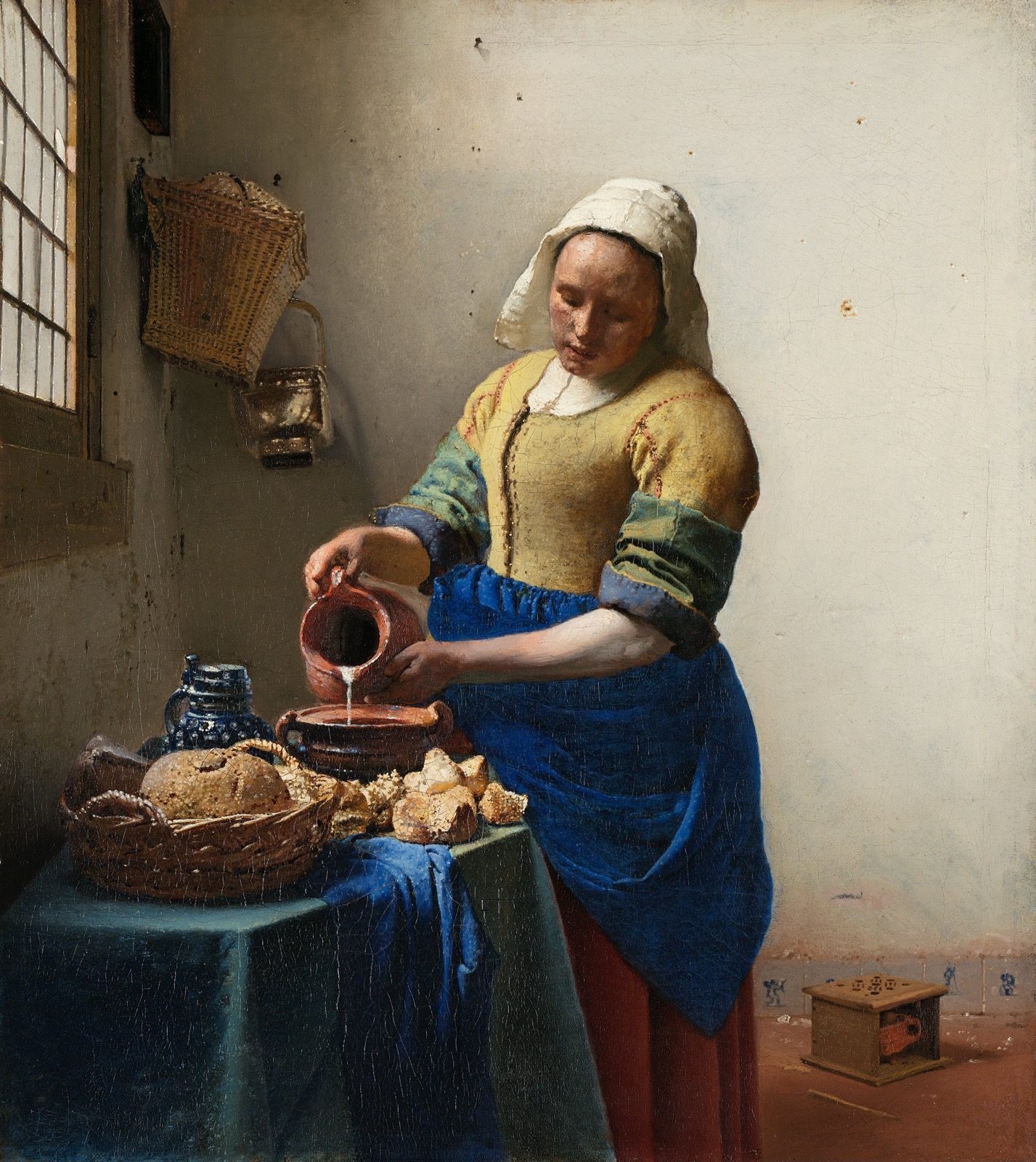
That is why the category can feel at once obvious and slippery. A visitor standing in front of a Vermeer interior has no trouble seeing what it is. The museum label, the wall text and the search query that brought the visitor through the door all use a word the painter never used.
What the Dutch were actually painting
With no umbrella term to organize the market, painters specialized. The Met's essay traces the range, and the specialisations are distinct enough to tabulate.
| What it shows | Who painted it | A documented example |
|---|---|---|
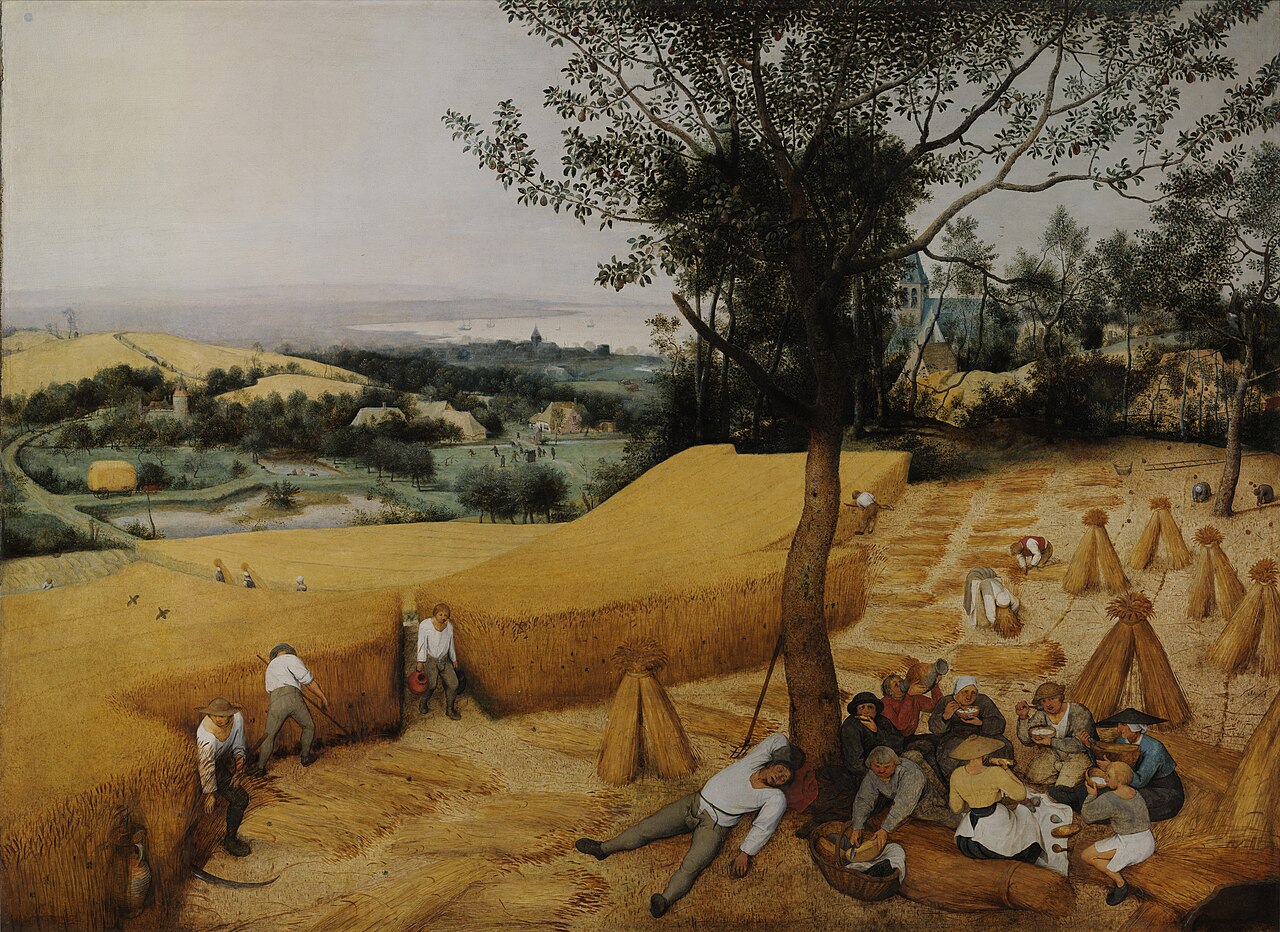
| Peasant labor, weddings and village fairs | Pieter Bruegel the Elder (about 1525-1569) | The Harvesters, 1565, Metropolitan Museum of Art |
| Crowds of well-dressed revellers | Willem Buytewech (1591-1624) and Frans Hals (1582/83-1666) | Frans Hals, Merrymakers at Shrovetide, Metropolitan Museum of Art |
| Tavern brawls and card players | Adriaen Brouwer (1605/06-1638) | The Smokers, Metropolitan Museum of Art |
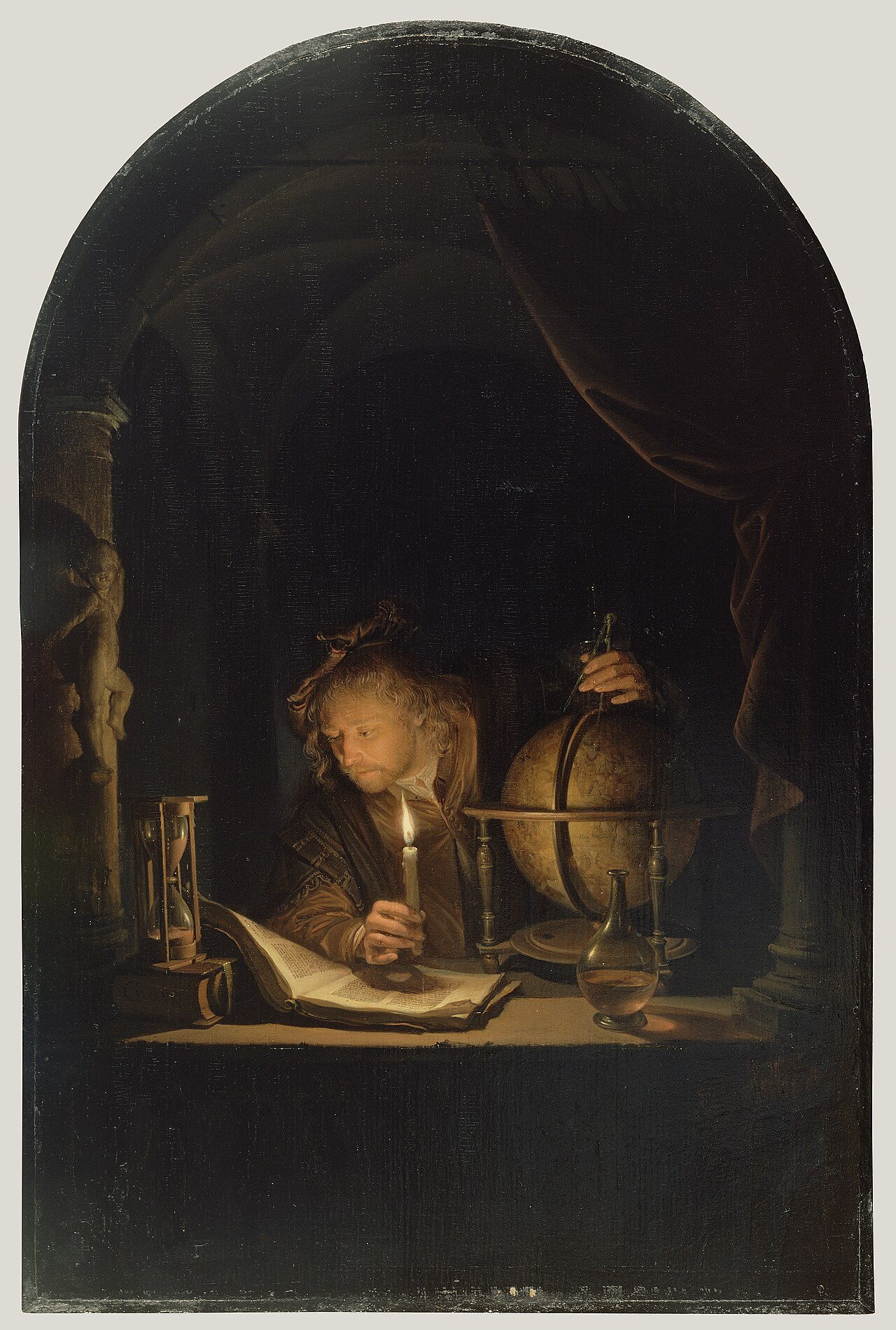
| Small, minutely finished interiors lit by hearth or candle | Gerrit Dou (1613-1675) and Frans van Mieris (1635-1681) | Gerrit Dou, Astronomer by Candlelight, about 1656-1659 |
| Upper-class rooms, figures reading, writing or at a mirror | Gerard ter Borch the Younger (1617-1681) | ter Borch's domestic interiors, Metropolitan Museum of Art |
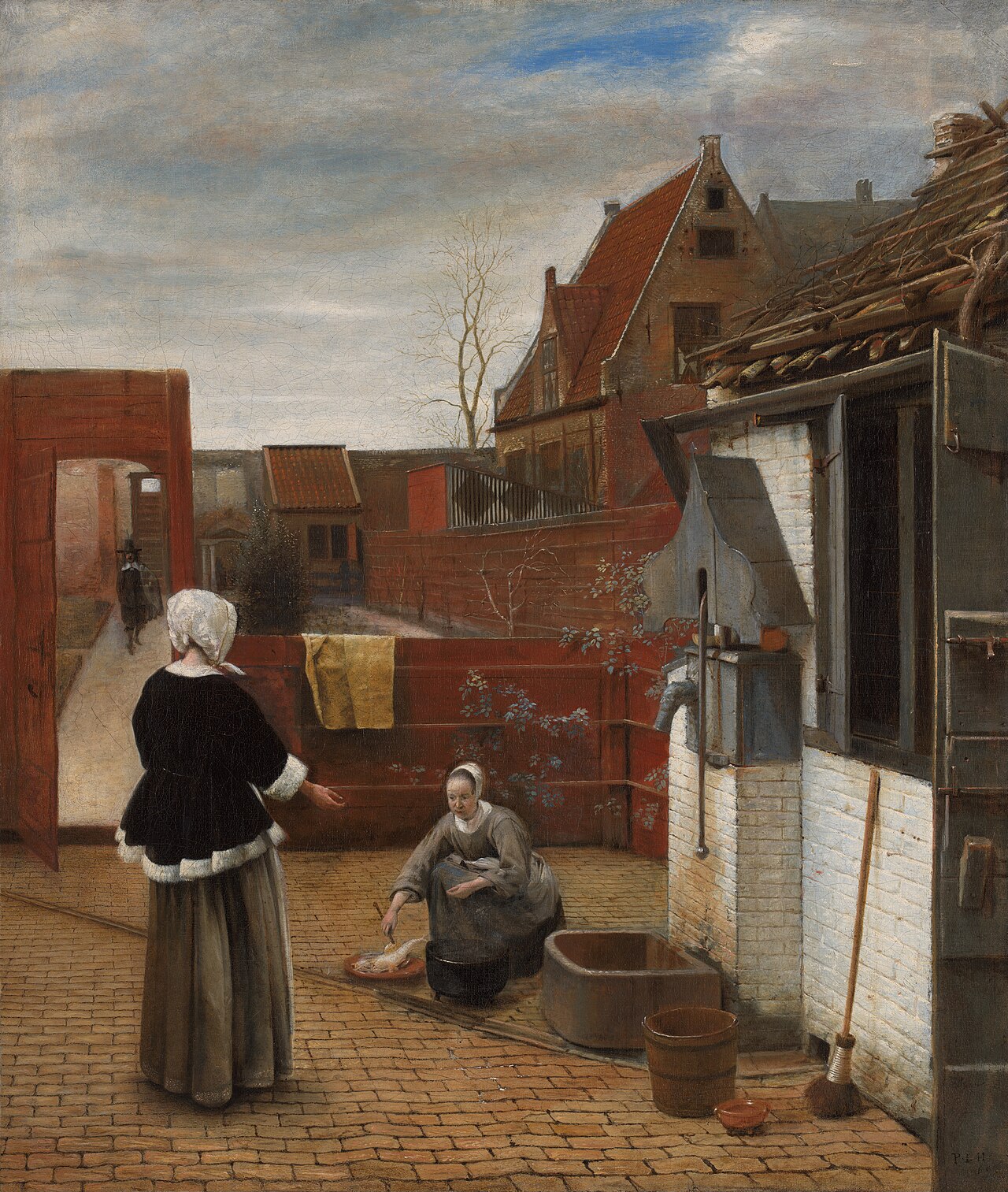
| Quiet Delft rooms in careful daylight | Pieter de Hooch (1629-1684) and Johannes Vermeer (1632-1675) | de Hooch, A Woman and her Maid in a Courtyard, National Gallery, London |
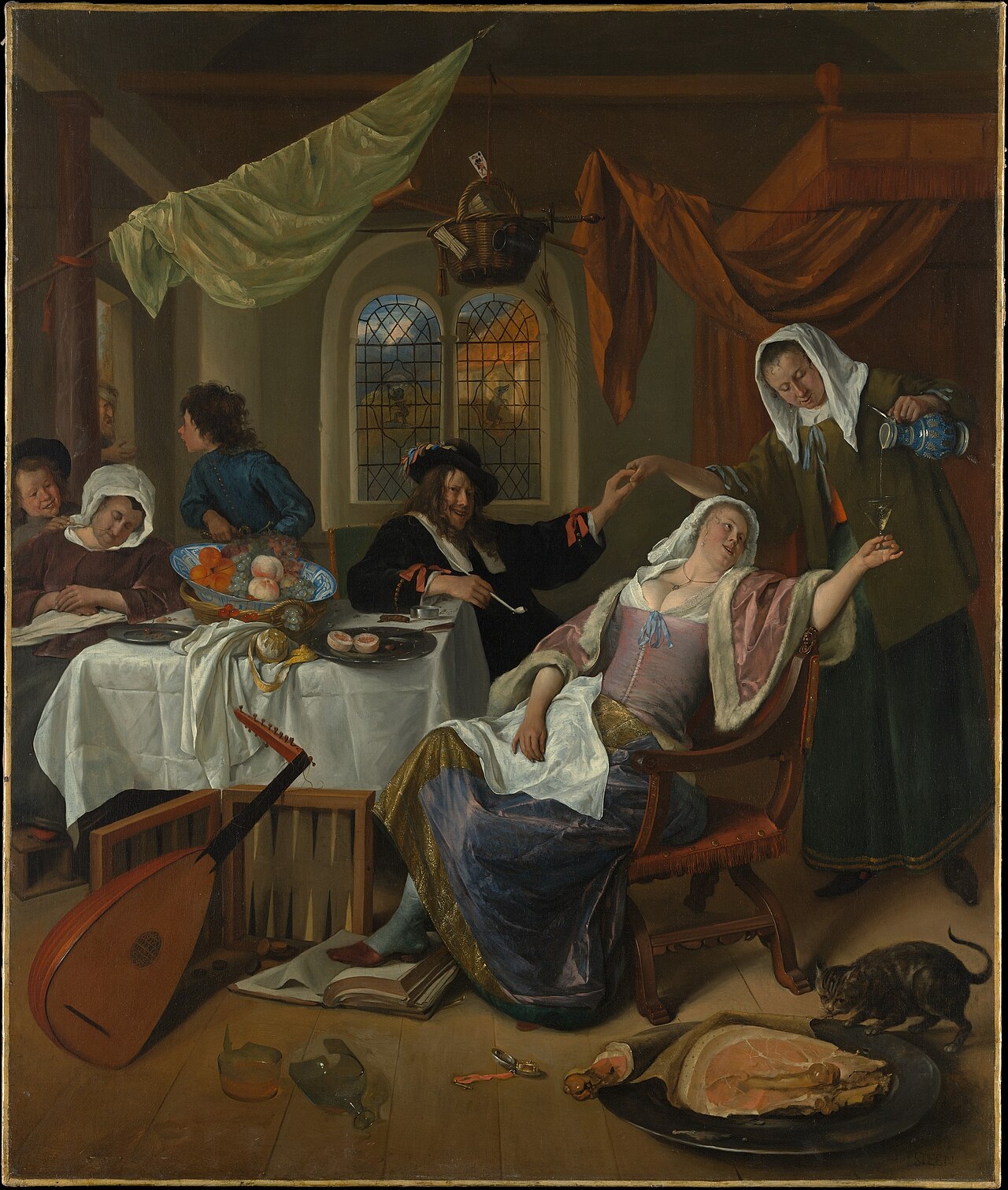
| Comic, moralising households | Jan Steen (1626-1679) | The Dissolute Household, 1982.60.31, Metropolitan Museum of Art |
| Street life in Rome, painted by northerners | The Bamboccianti, led by Pieter van Laer (about 1592/95-?1642) | works by Jan Miel, Johannes Lingelbach and Michiel Sweerts |
The list is a reminder that the category is a container built afterwards. Bruegel's peasants, Brouwer's tavern brawls and ter Borch's silk-clad letter writers were not competing for the same wall, and the buyers who collected them were not shopping for a genre painting.
Why the view into someone else's room sold
The Met's essay names the mechanism that made these pictures sell. A large part of a genre scene's appeal, it says, was "the opportunity it afforded to gaze into a private interior much like the one in which it might have hung and, in many cases, to identify with the values expressed by the subject."
The National Gallery makes a related point about Pieter de Hooch, whose courtyard pictures it calls some of the most evocative examples of the form. Scenes of ordinary mothers and children, or of maids and their mistresses at ease in their own homes, had hardly been depicted in art before; in Holland from about the 1640s the theme became a popular one. Vermeer's Milkmaid belongs to this group.
The same page is careful about how literally to read any of it. These scenes were not necessarily real, the gallery notes, and were often idealised, holding up the household virtues expected of the women who ran them. The rooms are painted with real construction, and the lives inside them are arranged.
That makes the pictures a record of a market as much as of a household. They show a version of daily life shaped for a buyer, which is a different thing from a neutral record of one.
What the market did with the ranking
Buyers did not follow the ranking. Gerrit Dou, the Leiden painter the Met calls the first and greatest of a school of fine painters, worked small and slow, and it paid: pictures of this kind "were produced in great quantity, often fetched large sums," and were "collected by bakers, burghers, and princely patrons alike."
A form that theorists placed below portraiture, and well below history, found buyers at every level of Dutch society. The people who hung these pictures on their walls were not making a point about the hierarchy of genres. They were buying a view into someone else's room.
Where the joke carried the moral
Jan Steen's household scenes are the clearest evidence that these pictures were never only documentary. In The Dissolute Household a man with a pipe and a woman with a wine glass pay each other no attention while a maid pours; a lute lies on the floor, a ham sits on a platter, and a cat inspects it.
The Met reads the scattered objects as an argument. The joint of meat and the broken jug "warn against profligate behavior," while a clapper and crutch, "symbols of poverty and disease," hint at what lies ahead for the family. A viewer who laughs at the mess has already absorbed the warning.
The form crossed the Alps and the Pyrenees
The Dutch did not keep the form to themselves. The Met describes a group of Dutch and Flemish artists working in Rome by about 1625, nicknamed the Bamboccianti after their leader Pieter van Laer, who was known as Il Bamboccio. Jan Miel, Johannes Lingelbach and Michiel Sweerts painted contemporary life in the Roman countryside, and the Met traces the realism and dramatic lighting of those pictures to Caravaggio.
In Paris, Louis Le Nain brought what the Met calls a classicising gravitas to scenes such as the Peasant Family, and his example shaped the street scenes of the next generation. The National Gallery records the same current arriving in Italy from the other direction: most Italian artists of the period concentrated on religion, mythology and history, and the ones who broke away, Crespi among them, were influenced by Dutch painters working in Italy. Unlike the Netherlands, the gallery notes, Italy had no comparable market for pictures of this kind.
Murillo's peasant boys in Seville belong to the same current. The National Gallery notes that he may have drawn on seventeenth-century Dutch and Flemish paintings of everyday life.
The traffic ran both ways, which is part of why the category resists a clean national label. A Roman street scene by a Utrecht painter and a Seville street urchin by a Spanish painter are both genre paintings, and neither owes its subject to the academies that named the category.
The word traveled, and the pictures moved to the city
Tate follows the form out of the Netherlands and across two centuries. In Britain, William Hogarth's modern moral subjects were "a special kind of genre, in their frankness and often biting social satire," and plainer versions followed from George Morland and Francis Wheatley. Genre painting became hugely popular in the Victorian period after the success of David Wilkie.
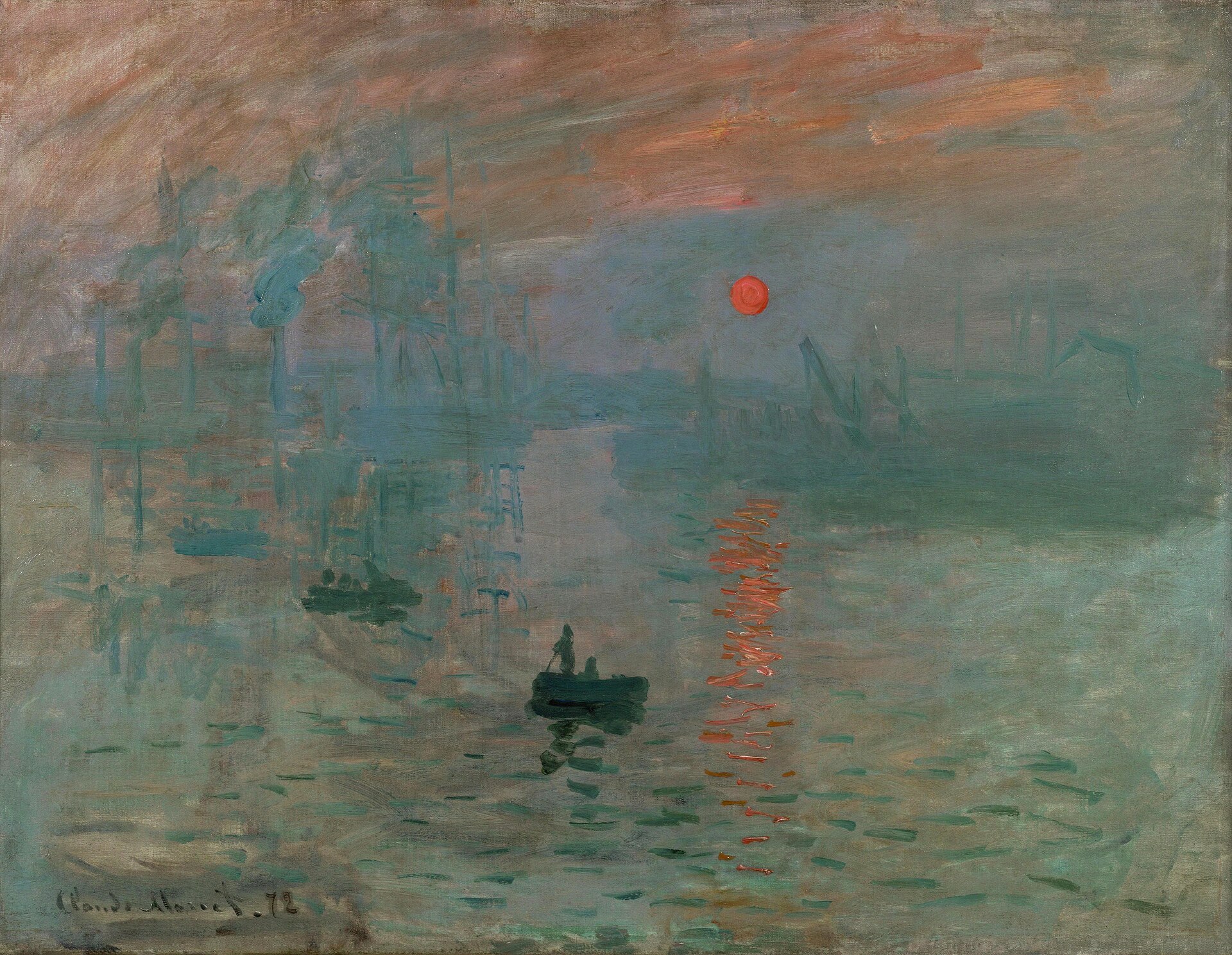
By the end of the nineteenth century the subject had moved to the city. Tate describes Impressionists including Renoir and Monet capturing "the excitement and fleeting nature of the modern life they saw around them," and Walter Sickert painting alienated couples in interiors.
In France the line ran through Chardin, Greuze and Fragonard, who the Met says kept subjects drawn from earlier Dutch work alive into the eighteenth century. The label was established after the early Dutch examples discussed here. The name Art Deco also became popular retrospectively, through a 1966 exhibition and a 1968 book. Those milestones do not prove that no contemporary ever used it.