The test: mixed tones, not a diluted color
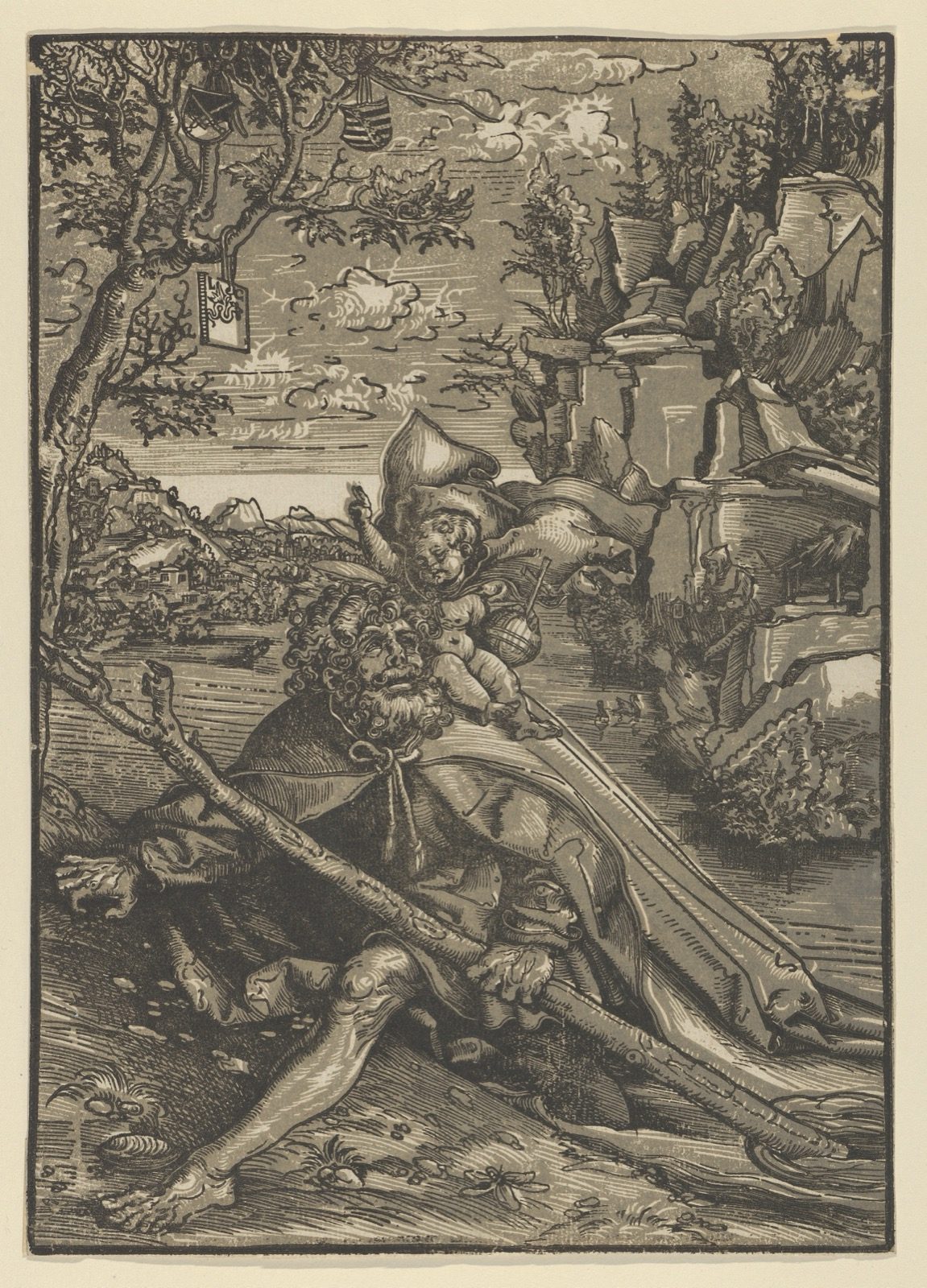
Grisaille is a painting made almost entirely in shades of one neutral color, traditionally grey. The word comes from the French gris, meaning grey, with the suffix -aille added to turn it into a noun for the finished effect. Britannica describes the term as a monochrome painting technique, produced either as a finished work in its own right or as a preparatory study for a picture that will later be developed in full color.
What separates grisaille from a plain grey wash is how the tones get there. National Galleries of Scotland's glossary entry describes the method as building value through tonal variations achieved by mixing white into black, not by diluting or scrumbling a single tone thinner or thicker. Diluting a wash gives you the same grey at different strengths. Mixing white into black gives the painter a full scale from near-black to near-white to model form and light the way a sculptor would with actual material.
That modeling ability is what grisaille has been used for since long before oil painters picked it up. Painters reached for it to do one of two jobs: fool the eye into reading a flat painted surface as carved stone or relief, or lay down a tonal foundation before adding color glazes on top. The technique's oldest surviving uses are not on panels at all. They are in glass.
It started with a ban on color, in glass
Grisaille's history in stained glass predates its use in panel painting by roughly three centuries, and it began as a workaround for a restriction, not an artistic choice. The Cistercian Order, the austere monastic reform movement that spread across medieval Europe, issued a rule in 1134 barring colored glass from its churches, part of a broader push against ornament the order considered a distraction from worship.
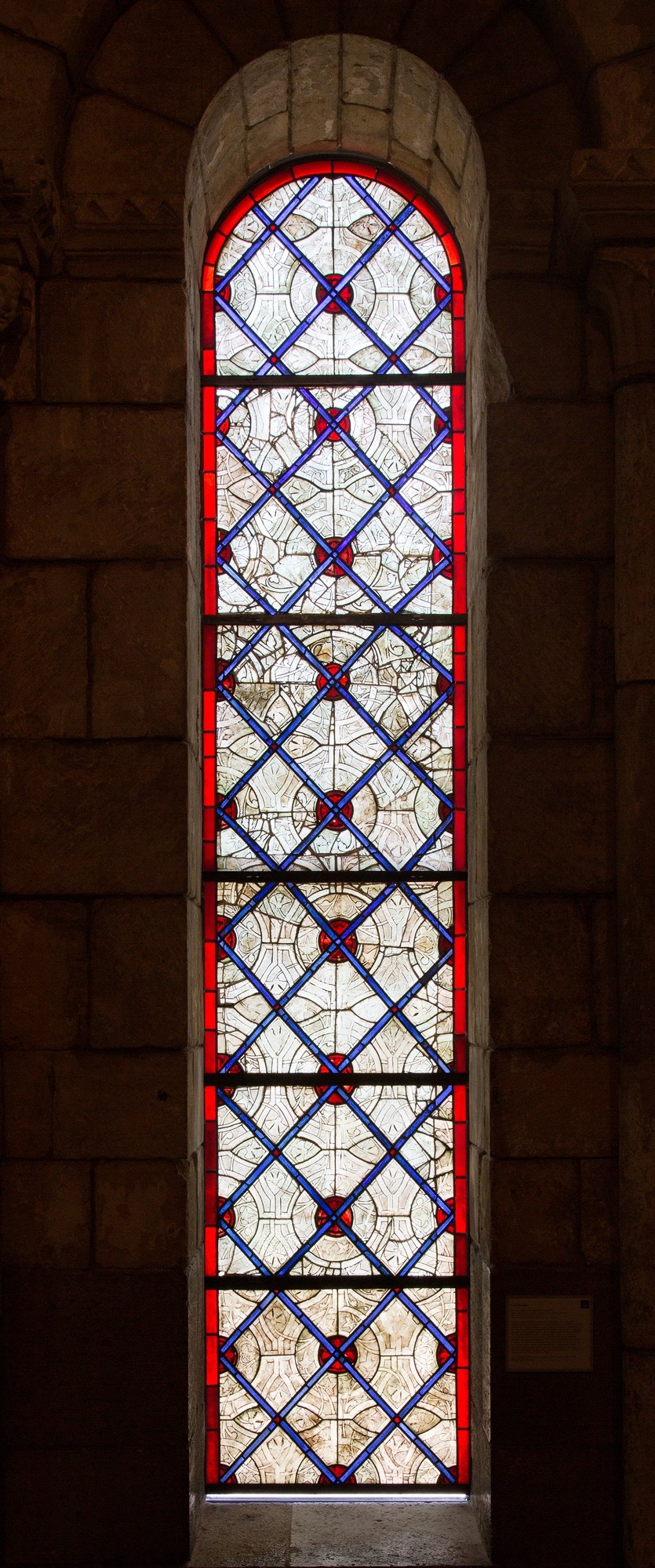
Glaziers working within that restriction developed what came to be called the grisaille window: panes made largely of clear or lightly tinted glass, with foliate or geometric patterns painted on in a brown, iron-oxide-based pigment that fused permanently to the glass surface when fired. The Corning Museum of Glass defines the term this way: a monochrome grey design executed in that iron-oxide brown line, distinct from the fully colored pot-metal glass used elsewhere in the same buildings. The style caught on for reasons beyond doctrine. Grisaille glass was cheaper to produce than glass colored throughout with metallic oxides, and because it let far more daylight through, it lit church interiors that fully colored windows left dim.
The Metropolitan Museum's Cloisters branch holds a surviving set of these windows: four French grisaille panels, probably made in Normandy, that the museum dates to 1270-80, acquired as part of the Cloisters Collection in 2010. They show the same restrained brown-on-clear patterning the 1134 rule pushed glaziers toward more than a century earlier, made permanent by the same firing process used on fully colored church glass of the period.
The statues that weren't visible for 500 years
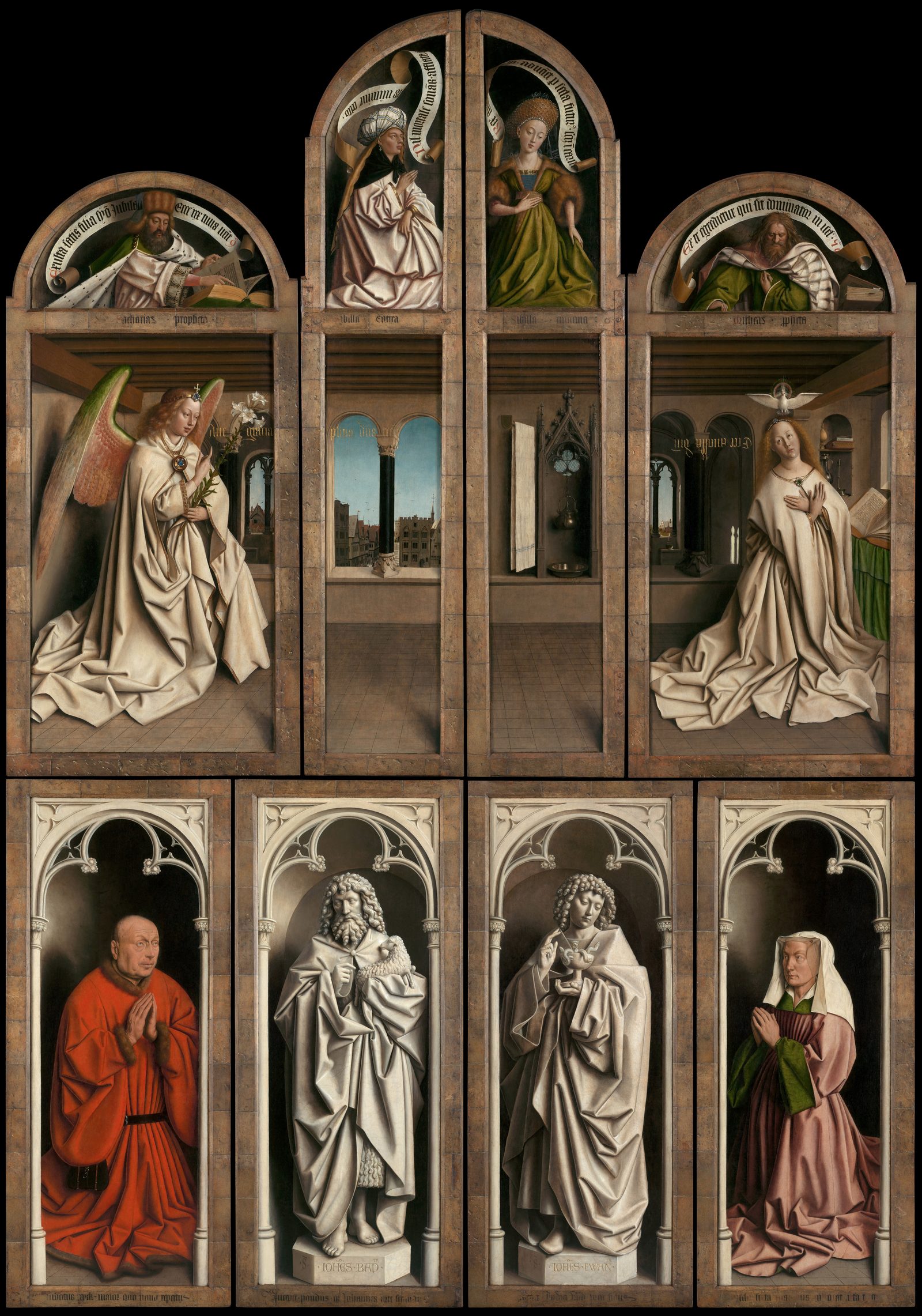
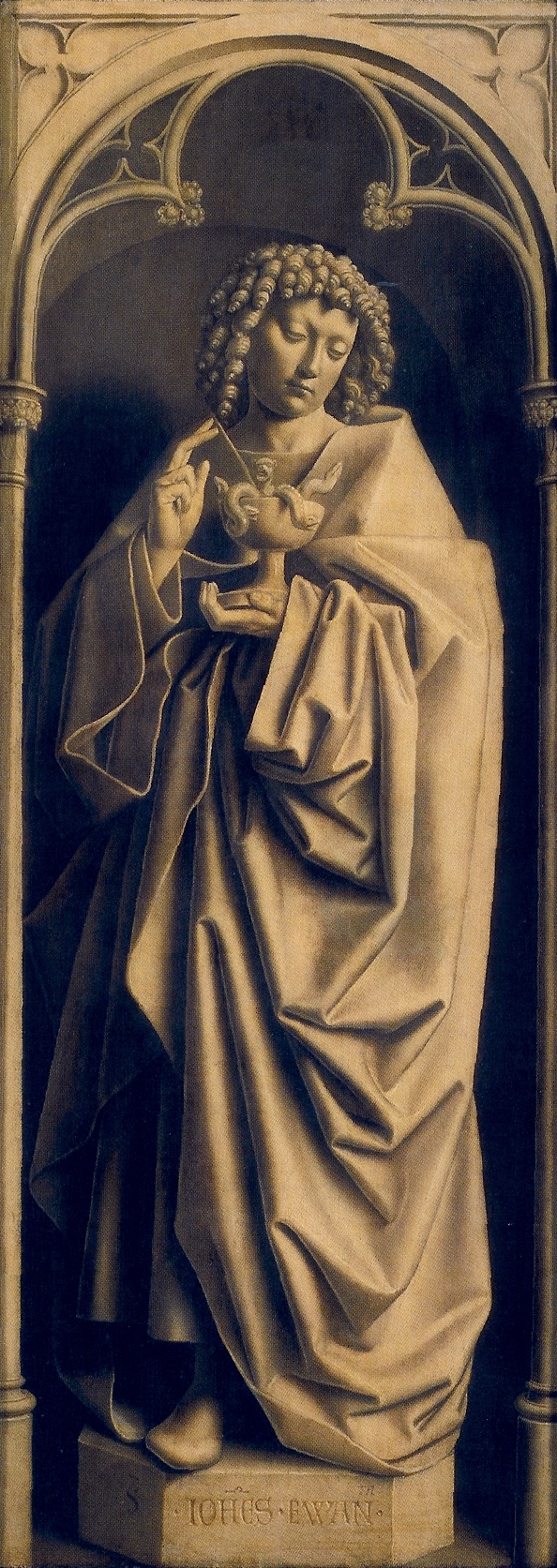
By the time Jan and Hubert van Eyck completed the Ghent Altarpiece in 1432, grisaille had moved from glass to panel and taken on its most famous job: imitating sculpture. When the altarpiece's wings are closed, the lower register shows Saint John the Baptist and Saint John the Evangelist rendered entirely in shades of grey, standing in painted stone niches that read, at a glance, as carved statues, not paint on oak. The illusion works because Van Eyck modeled the folds of drapery and the fall of light across each figure exactly as a sculptor would carve them, using the black-to-white tonal range grisaille makes possible.
That illusion turned out to be more fragile than it looked, not to the eye but to time. When the Royal Institute for Cultural Heritage, known by its Dutch initials KIK-IRPA, began conserving the closed altarpiece's panels in October 2012, the plan was routine: remove recent retouching and yellowed varnish, stabilize the paint layer, conserve the wooden supports. Restorers instead found the paint covered by large zones of overpaint whose existence had gone unrecorded for centuries. Further research by KIK-IRPA's laboratories, together with the universities of Ghent and Antwerp, dated these additions to the middle of the 16th century and found they covered around 70 percent of the surface, closely enough following Van Eyck's original composition that they had gone undetected under yellowed varnish for generations.
An international committee of outside experts reviewed the findings and approved removing the overpaint, a process restorers then carried out centimeter by centimeter with a scalpel under a binocular microscope, work that ran through the end of Phase 1 of the treatment in October 2016. KIK-IRPA's press materials state the result plainly: "the exceptional quality of the closed Ghent Altarpiece hadn't been visible for nearly 500 years." A technique built to convince viewers they were looking at real stone had itself been quietly repainted, closely enough to pass, and mistaken for Van Eyck's own hand for nearly five centuries before conservators proved otherwise.
Not the same grey: verdaccio
Grisaille's other traditional job, laying down tone before adding color, gets confused often enough with a related but distinct Renaissance technique that the two deserve to be pulled apart. True grisaille stays neutral: black and white mixed together, with no other pigment shifting the hue. Verdaccio starts from a different base, a dark pigment worked with a yellow earth ochre to produce a warmer, greenish-grey mixture built specifically to sit under flesh tones, letting the cooler green push back against the pink and red glazes painted over it later so skin reads as lifelike, not flat.
Leonardo da Vinci is the painter most associated with the technique, and he used verdaccio, not true grisaille, to construct faces and hands. It sits beneath the finished glazes of the Mona Lisa, invisible to the eye but detectable in technical imaging of the paint layers, and it stands fully exposed in his unfinished Adoration of the Magi, abandoned mid-underpainting in 1482 when Leonardo left Florence for the Sforza court in Milan and never returned to finish the commission. Because the panel was never glazed in color, its greenish-grey underlayer is the entire visible painting today, held at the Uffizi.
So the underpainting most people picture when they hear grisaille, the ghostly monochrome layer beneath a Renaissance portrait, is more often verdaccio specifically, not grisaille in the strict, neutral-grey sense the word originally described.
Picasso's grey, five centuries later
On April 26, 1937, German and Italian aircraft flying for the Nationalist side in the Spanish Civil War bombed the Basque town of Guernica, killing and wounding a large share of its civilian population. Pablo Picasso, in Paris and already committed to a mural for the Spanish Republic's pavilion at that year's World's Fair, learned of the bombing when reports reached the city on May 1 and switched the mural's subject within days.
The painting he produced, finished within a month and known simply as Guernica, is grisaille in the strict sense the Van Eycks would have recognized: grey, black and white only, with no other color anywhere on the canvas. A widely cited art-history account of the painting, published through the University of Utah's pressbooks platform, offers the standard reading of that choice: "this may reflect his initial encounter with the original newspaper reports and photographs in black and white; or perhaps it suggested to Picasso the objective factuality of an eye witness report." The same account adds that a mottled, textured passage across the canvas's center is often read as an echo of newsprint itself. Picasso left no single definitive statement pinning down his reasoning, so historians present this as the leading interpretation, not a settled fact. The finished 349 by 776 centimeter canvas now hangs in the Museo Reina Sofía in Madrid.
Guernica's grey is doing documentary work: standing in for the black-and-white photographic record through which the event reached the public. That is a different job from the abstract painters who returned to pure monochrome decades later, stripping color out to focus attention on form and surface rather than to evoke any specific external image. Picasso's grisaille still depicts something. Their monochrome, in several well-known cases, deliberately did not.
Four examples, seven centuries
Laid side by side, these four uses of grisaille and its close relative verdaccio span roughly seven centuries, two mediums and at least three distinct purposes, from a monastic building code to a war memorial.
| Work | Date | Medium | What the grey does |
|---|---|---|---|
| French grisaille windows (The Cloisters) | 1270-80 | Painted stained glass | Ornamental pattern, cheaper than color, lets in more light |
| Ghent Altarpiece exterior (Van Eyck) | 1432 | Oil on oak panel | Imitates carved stone statues |
| Mona Lisa / Adoration of the Magi (verdaccio, Leonardo) | c. 1481-1506 | Oil/tempera underlayer | Tonal base for flesh, glazed over in color when finished |
| Guernica (Picasso) | 1937 | Oil on canvas | Finished painting, evokes newsprint and photographic record |
What holds those four rows together is the same underlying trick: a painter or glazier deciding that removing color, rather than adding it, was the most convincing way to make a viewer believe in what they were looking at, whether that was a saint carved from stone, a face built from living flesh, or a bombing most of the audience would only ever see in black and white. UmberLore's Technique hub covers the chiaroscuro woodcut's own disputed origin story and Prussian blue's accidental discovery, among others, if the mechanics behind a technique are what brought you here.
.jpg)
