What people are actually asking
Threads titled "what is the difference between tempera and acrylic paint" usually mix three products under one word. Fine-art egg tempera, the yolk-and-pigment system used on medieval panels and still taught in ateliers, is one. Plastic-tub "tempera" sold for classrooms is often a different binder entirely. Acrylic is a third system: pigment in acrylic polymer emulsion. Treating those three as a single binary is how short TikTok and Reddit answers end up contradicting each other without anyone being wholly wrong.
This page keeps the comparison on binders, thinners, transparency, and first widespread use, then parks the school-paint naming problem in its own section. For neighbouring craft histories see encaustic (wax) painting and the broader art techniques index.
Five-medium comparison
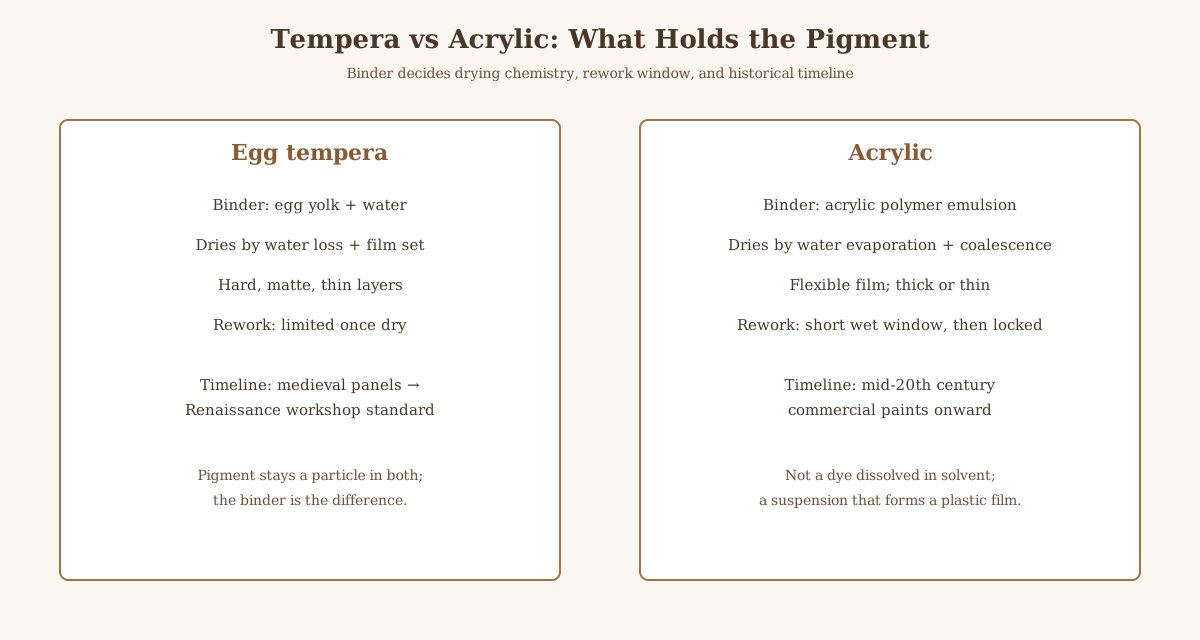
Binder decides drying behaviour more than brand marketing does. Egg tempera uses yolk (sometimes whole egg) as the binder and water as the thinner; films dry fast to a matte, luminous surface and do not stay open for long blending the way oil does. Acrylic uses acrylic polymer emulsion as the binder and water as the thinner while wet; once dry, the film resists water. Oil uses drying oils (linseed and relatives), thinned historically with spirits, and stays workable for hours. Watercolour uses gum arabic and stays re-wettable on paper. Gouache is opaque watercolour: the same gum family with more filler, built for flat covering colour rather than transparency.
A working table for studio choice: egg tempera : binder egg yolk, thinner water, relative transparency high in thin hatches, in wide use by Late Antiquity through the early Renaissance panel tradition, Tate and other museums still catalogue modern egg-tempera works. Acrylic : binder acrylic polymer, thinner water (while wet), can be glazed or laid opaque, commercial artists' lines from the mid-20th century. Oil : binder drying oil, slow, blendable, dominant easel medium from the 15th century onward (see also antique oil painting). Watercolour : gum arabic, paper support, reactivates with water. Gouache : opaque aqueous, poster and design work as well as fine art. Grisaille and fresco sit outside this tub-paint comparison: one is a monochrome strategy, the other a wall plaster process.
Dated timeline (Antiquity to acrylic tubes)
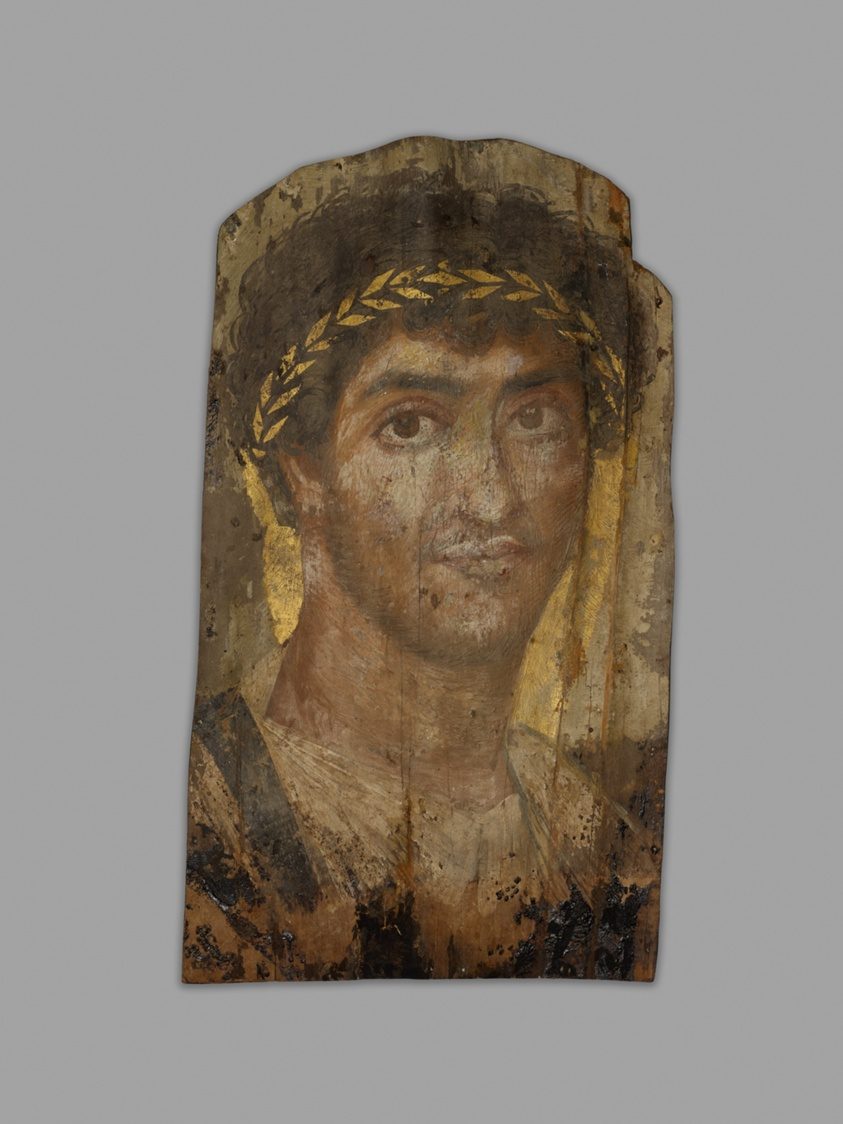
Egg-based and related aqueous binders are ancient. Egyptian and Greco-Roman painters used protein binders; Byzantine and medieval European panels made egg tempera the default before oil displaced it for many easel painters in the fifteenth and sixteenth centuries. The technique never fully vanished: twentieth-century painters returned to egg tempera for its hatch clarity and matte light.
Acrylic is modern. Solvent-borne acrylic resin paints for artists (notably Bocour's Magna) appear in the late 1940s; waterborne acrylic emulsions marketed to artists (Liquitex and peers) scale in the 1950s. Secondary sources still disagree on which milestone to call "the" origin of acrylic paint: some emphasize Magna around 1947-1949, others the 1950s waterborne products that match what most students mean by acrylic today. This page keeps both dates visible rather than picking a marketing winner.
By the 1960s acrylic was common enough that Pop and Colour Field painters could rely on fast drying and water cleanup without treating the medium as an experiment.
Why "tempera" names two products
In a museum wall label, tempera almost always means egg tempera (or a closely related protein binder) unless the label specifies otherwise. In a US school-supply aisle, "tempera paint" often means an inexpensive opaque aqueous paint bound with glue, starch, or similar, formulated for washability and price, not for yolk chemistry. Asking "tempera vs acrylic" in that aisle is really "poster paint vs acrylic craft paint." Asking the same question beside a Botticelli panel is "egg yolk binder vs acrylic polymer."
When a forum reply says tempera is "chalky and weak" it is usually describing school tempera. When a conservation text praises tempera's optical clarity, it is describing egg tempera. Same English word, different materials.
Studio tradeoffs that actually change a painting
Choose egg tempera when you want fast-setting hatches, a matte luminous surface, and a medium that pushes you toward planned layers rather than open-form blending. It hates greasy grounds and rewards true gesso panels.
Choose acrylic when you want water cleanup, fast layering, and optional opacity or glaze in one polymer system. Acrylic's dried film does not re-dissolve like watercolour; mistakes are overpainted, not lifted.
Do not expect school tempera to behave like either fine-art system. It can be a sketch or classroom tool; it is not a drop-in substitute for yolk tempera on a panel you intend to keep.