The story usually skips its first decade
Ask where psychedelic art came from and the answer usually starts in 1966, with the concert posters Wes Wilson and a handful of other San Francisco artists made for Bill Graham's Fillmore Auditorium: swirling color, hallucinatory imagery, lettering that seemed to melt. The implied mechanism is direct. Someone took LSD, and the trip came out on paper. That story skips the drug's first decade of American use almost entirely. Beginning in 1954, a full twelve years before California made LSD illegal and before Timothy Leary had made himself its public face, a Los Angeles psychiatrist named Oscar Janiger was already giving the drug to patients in a research setting and asking some of them to paint what happened.
Seventy patients paint the same doll twice
Janiger's main study eventually involved about 900 subjects, drawn from actors, writers, housewives, physicians, and at least one deputy marshal, each given a controlled dose and asked to describe the experience. A sub-study, aimed specifically at creativity, brought in roughly a hundred professional artists. One of them was Frank Murdoch, a Fortune magazine illustrator being treated with LSD as an attempted cure for late-stage alcoholism. Janiger had Murdoch, and about seventy other patients besides, paint the same object twice: a Hopi kachina doll, once sober and once under the drug's influence. The doll itself still sits on the mantel in Janiger's home, beneath Murdoch's pair of paintings, one a careful, representational likeness, the other awhirl with color and motion, its planes bending in several directions at once.
Art historian Carl Hertel later analyzed roughly 250 paintings and drawings the study produced, comparing each artist's sober and LSD-influenced versions. His 1971 assessment found the drugged work was neither better nor worse than the artists' ordinary output, but it was consistently brighter, more abstract, and less representational, and it tended to fill the entire canvas rather than leave empty space. Janiger himself was more cautious about the work's quality than its psychological weight. "There wasn't a single artist who didn't think he or she had had some kind of revelation," he said, while declining to judge whether the paintings themselves were actually better, calling that a question outside a scientist's job to answer.
Stopped by a regulation, years before the ban
Janiger's research ran for eight years and stopped in 1962, and the reason had nothing to do with LSD's later reputation. He abandoned the project when the U.S. government began investigating researchers who worked with the drug that year, four years before California passed a law making LSD itself illegal in October 1966. The substance he had been legally buying from the Swiss manufacturer Sandoz for most of a decade was still, technically, on the market when he shut the study down. Janiger's work also predates Timothy Leary's more famous psychedelic advocacy, but it never carried the same cultural weight, largely because he did not widely publish his data at the time. A study that produced 250 paintings from roughly a hundred artists, wrapped up four years before the first Fillmore posters went up, left almost no public trail for the standard origin story to trip over.
Wilson's own account of the borrowing
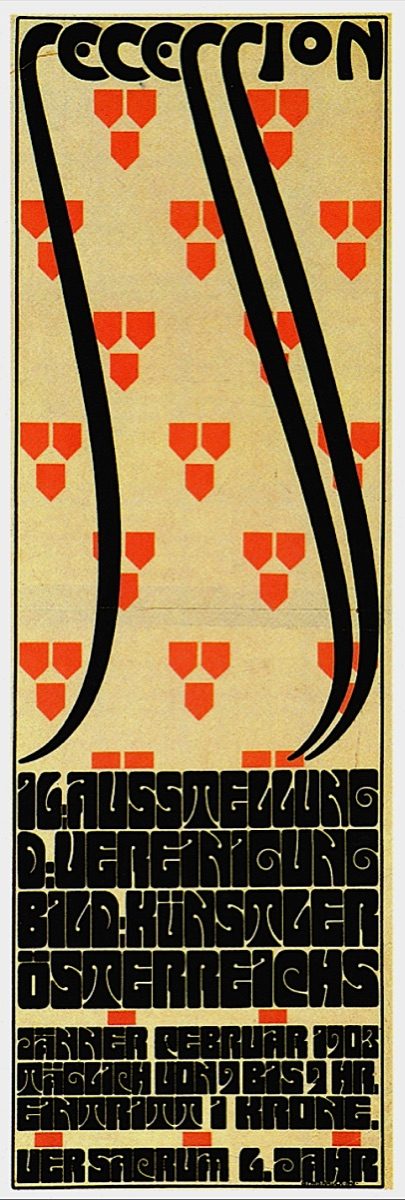
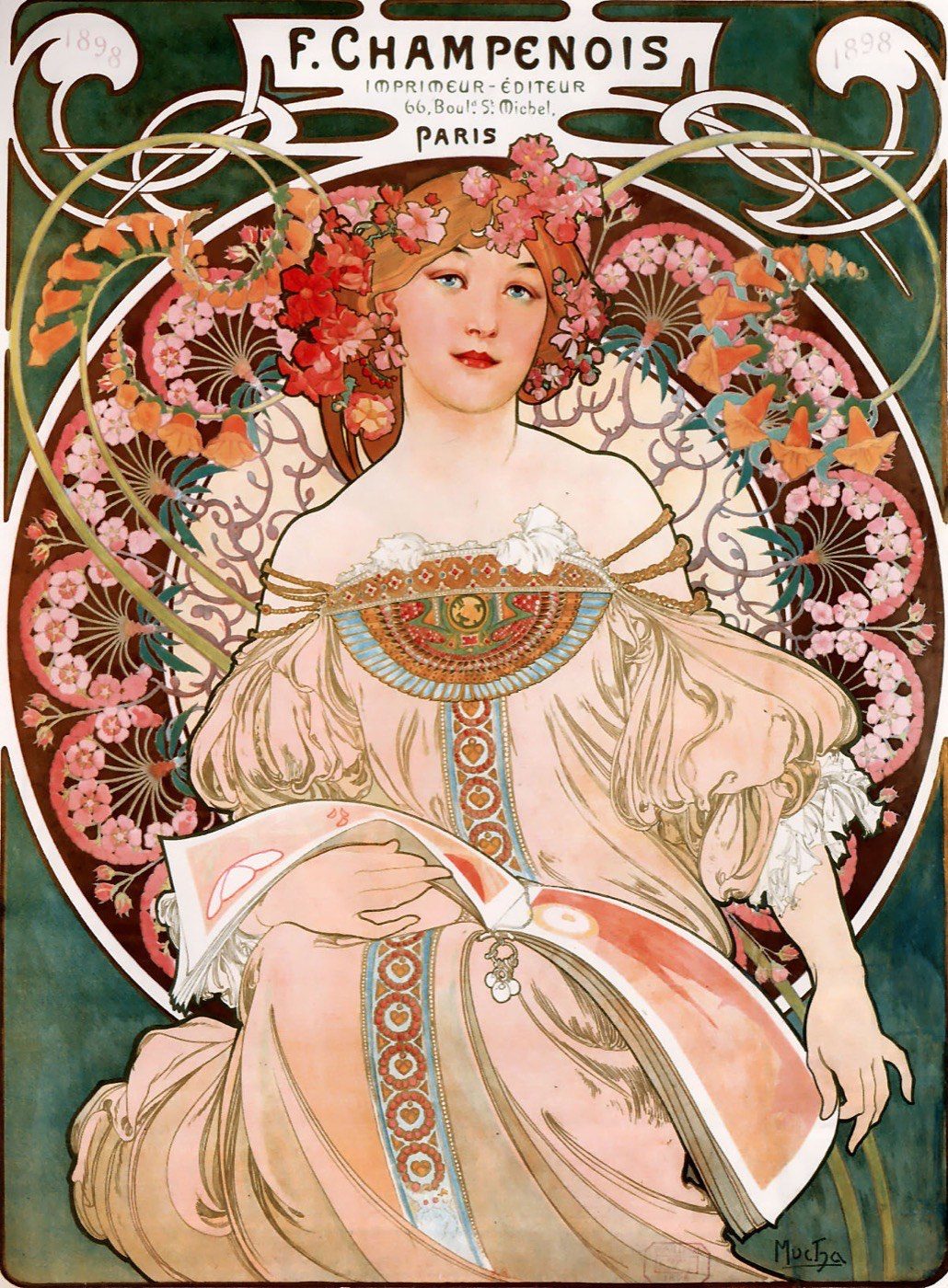
The visual signature most associated with psychedelic art, hand lettering that seems to bend, melt, and vibrate, is usually treated as a direct graphic translation of a drug experience. Wilson's own account of where it came from is more specific and less mystical. According to the Smithsonian American Art Museum's own biography of the artist, Wilson's "influential lettering was derived from the Viennese Secessionist lettering he discovered in a University of California exhibition catalogue," specifically the block lettering the Austrian designer Alfred Roller used on a poster for the Vienna Secession's sixteenth exhibition, staged in the winter of 1902–03. Poster House's chief curator, Angelina Lippert, separately places Roller's poster directly beside Wilson's 1967 poster for an Otis Rush performance at the Fillmore to show the letterforms carrying over almost intact, just stretched and colored differently. Wilson drew on other nineteenth-century sources too: his 1966 poster for Muddy Waters echoes the haloed, flower-crowned women Alphonse Mucha drew for the Paris printing house F. Champenois around 1897, and his 1967 poster for the Byrds recalls the undulating peacock illustrations of English artist Aubrey Beardsley.
A myth the museum itself corrects
The most repeated anecdote about psychedelic lettering is that Bill Graham rejected an early Wilson poster because its text was illegible, and that Wilson shot back that people would stop to read it precisely because they couldn't. It is one of the most durable origin myths in American poster history, and Poster House's own chief curator, writing an account of Wilson's career on the museum's blog, flags it by name as "popular myth" rather than repeating it as settled fact. No contemporary documentation from Graham or Wilson at the time confirms the exchange happened as it is now told. The line survives because it is a better story than a verified one; no contemporary record backs it up.
Not even a concert poster to begin with
Wilson's very first published poster wasn't for a band at all. In 1965, before he had designed a single handbill for Bill Graham or fellow promoter Chet Helms, Wilson self-printed and sold "Are We Next?", a Vietnam War protest image that superimposed a swastika onto an American flag. "I just put it out there to stir people up to thinking about things," he said of it. The poster caught Helms's attention and led to Wilson's first commissions designing handbills for Family Dog, and only within the following year did he begin making the concert posters, for both Helms's Avalon Ballroom and Graham's Fillmore, that would define the look now called psychedelic art. The genre's most famous visual signature started as a protest flyer.
The pattern shows up across the collection
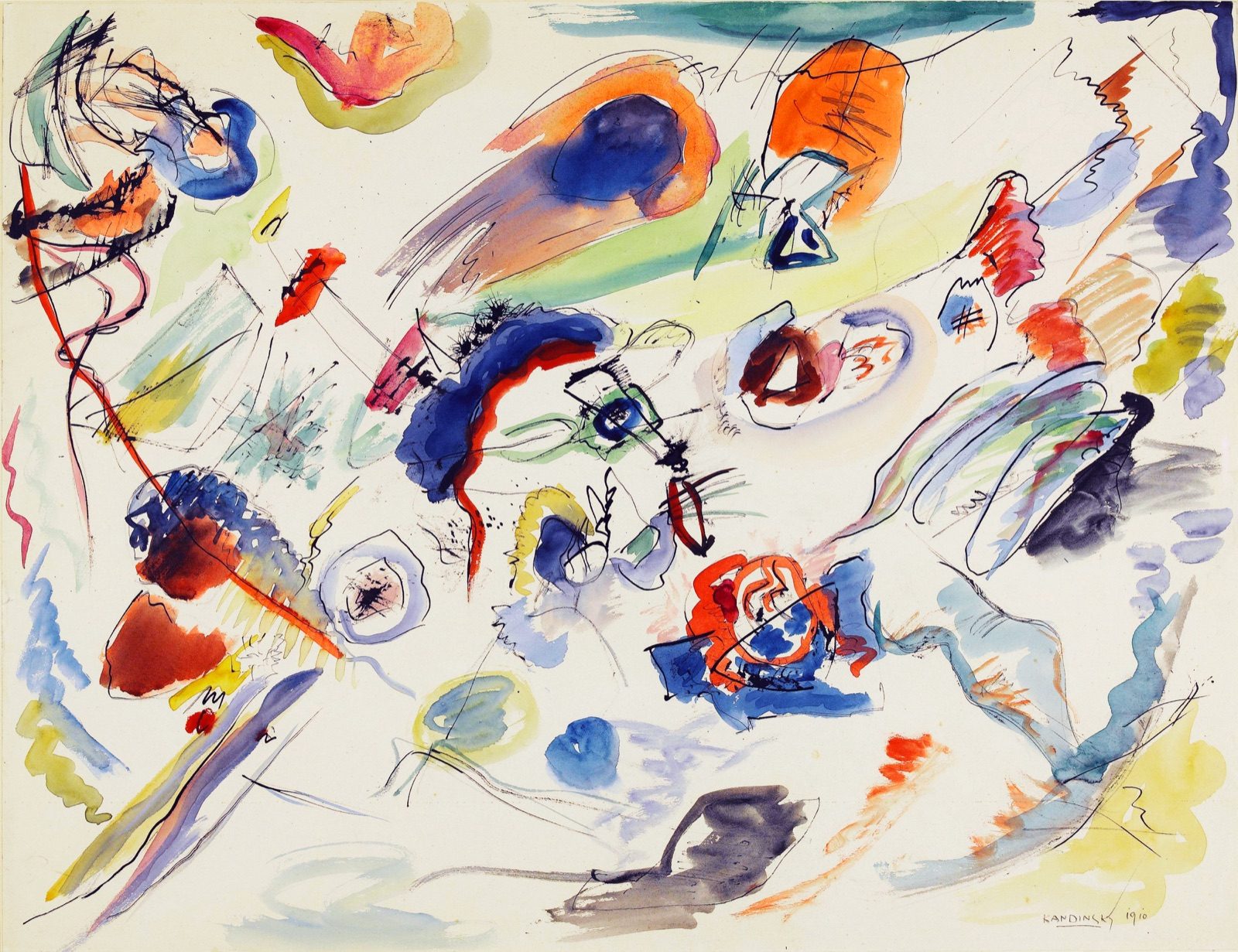
A movement's name outrunning its actual first instance isn't unique to psychedelic art. Pop art's own label has the same problem: the word "pop" turns up in a 1947 collage nine years before Richard Hamilton's better-known version, and fifteen years before any published essay printed the phrase "Pop Art" in its running text. Substituting a borrowed or mechanical process for spontaneous inspiration runs through the era's biggest name in painting, too: Andy Warhol adopted photographic silkscreen printing in 1962 specifically so a commercial vendor and his own assistants could reproduce his designs without him touching them. And a "first" that doesn't survive closer research is its own recurring story here: the painting long called the first fully abstract work has since been redated three years later by its own museum, and preceded anyway by a Swedish painter who kept her breakthrough hidden from the public for decades.