What people are actually asking
People comparing the two labels usually have a building photo and conflicting captions. Both sit inside the broader modern decorative period after World War I. The earlier flashy geometry belongs with Deco; the Depression-era and wartime preference for aerodynamic curves belongs with the later Moderne phase. For a broader Deco primer see Art Deco and the art styles index.
Side-by-side tells
| Cue | Art Deco | Streamline Moderne |
|---|---|---|
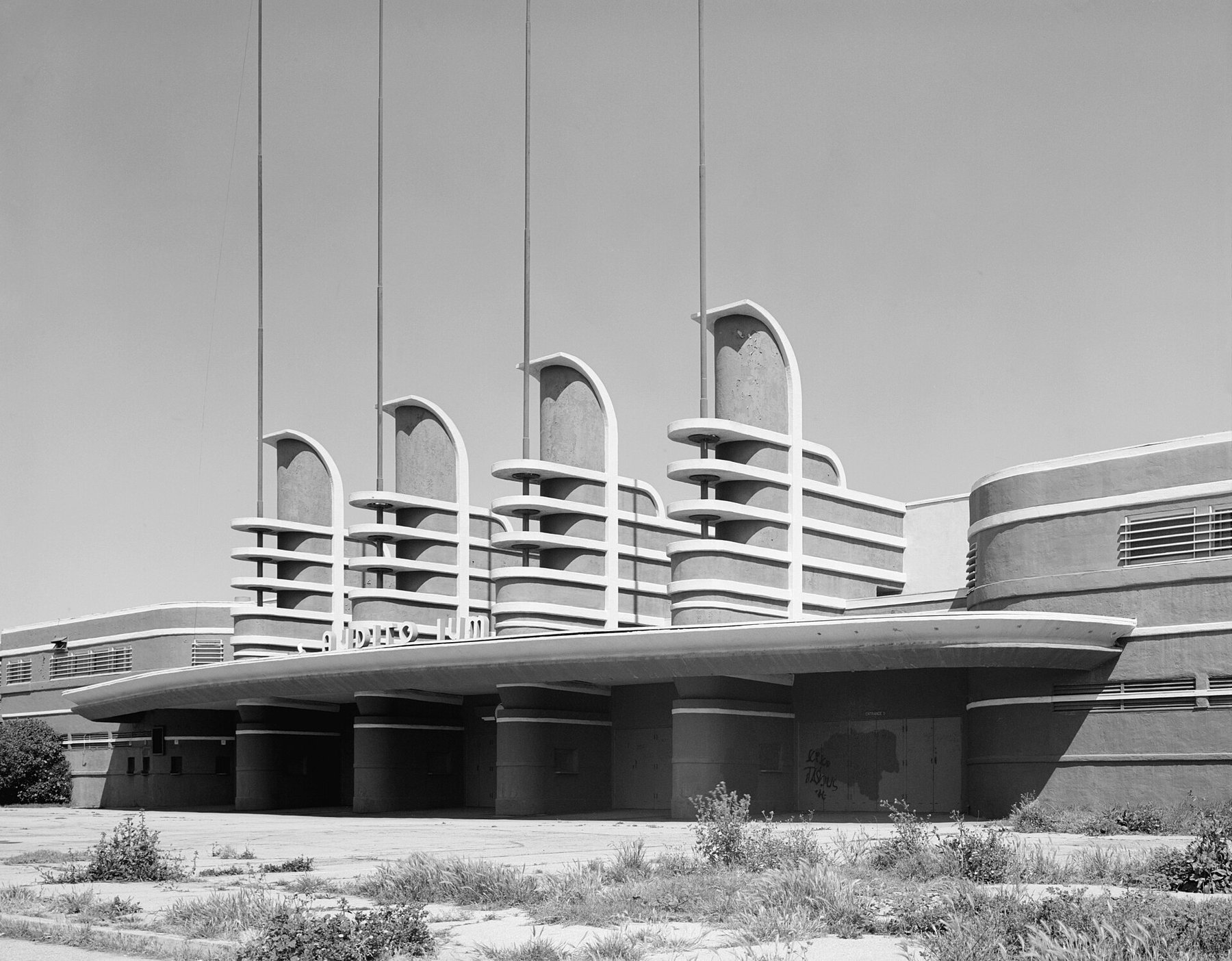
| Geometry | Zigzags, chevrons, sunbursts, stepped setbacks | Long horizontals, rounded corners, continuous bands |
| Motion metaphor | Luxury, electricity, exotic motifs | Speed, ships, planes, locomotives |
| Typical peak | Mid-late 1920s into early 1930s | Early 1930s into early 1940s |
| Surfaces | Polychrome terra cotta, metal grilles, rich contrast | Smooth stucco or concrete, glass brick, chrome trim |
A single building can mix cues: a Deco tower base with later storefronts. Date the remodel before forcing one label.
Field checklist
Count vertical punch: if the eye climbs zigzags or a sunburst crown, lean Deco. If the eye runs sideways along ribbon windows or a curved corner glass, lean the later Moderne phase.
Look for nautical hardware metaphors (portholes, railings) on diners, bus terminals, and factories from the 1930s-40s.
Do not use chrome alone as the vote; both styles used shiny metal. Pair chrome with either geometry or speed lines.
FAQ
Is the later curved look just late Deco?
Most surveys treat it as a related but leaner phase of modern decorative design, not a pure synonym.
Did the US and Europe use the same names?
American writing leans on one label; European texts use Moderne and various national names. Judge the building, not the hashtag.
Where does Art Nouveau fit?
Earlier (about 1890-1910), with organic whiplash curves rather than machine-age speed cues. Different century of fashion.