Place versus building
In Greek, acropolis means a high city: a defended upper town. Athens's Acropolis is the famous one, but other Greek cities had acropoleis too. UNESCO's World Heritage entry is titled "Acropolis, Athens" and describes the ensemble of masterpieces on the rock, not a single temple name [UNESCO: Acropolis, Athens, checked 2026-10-19].
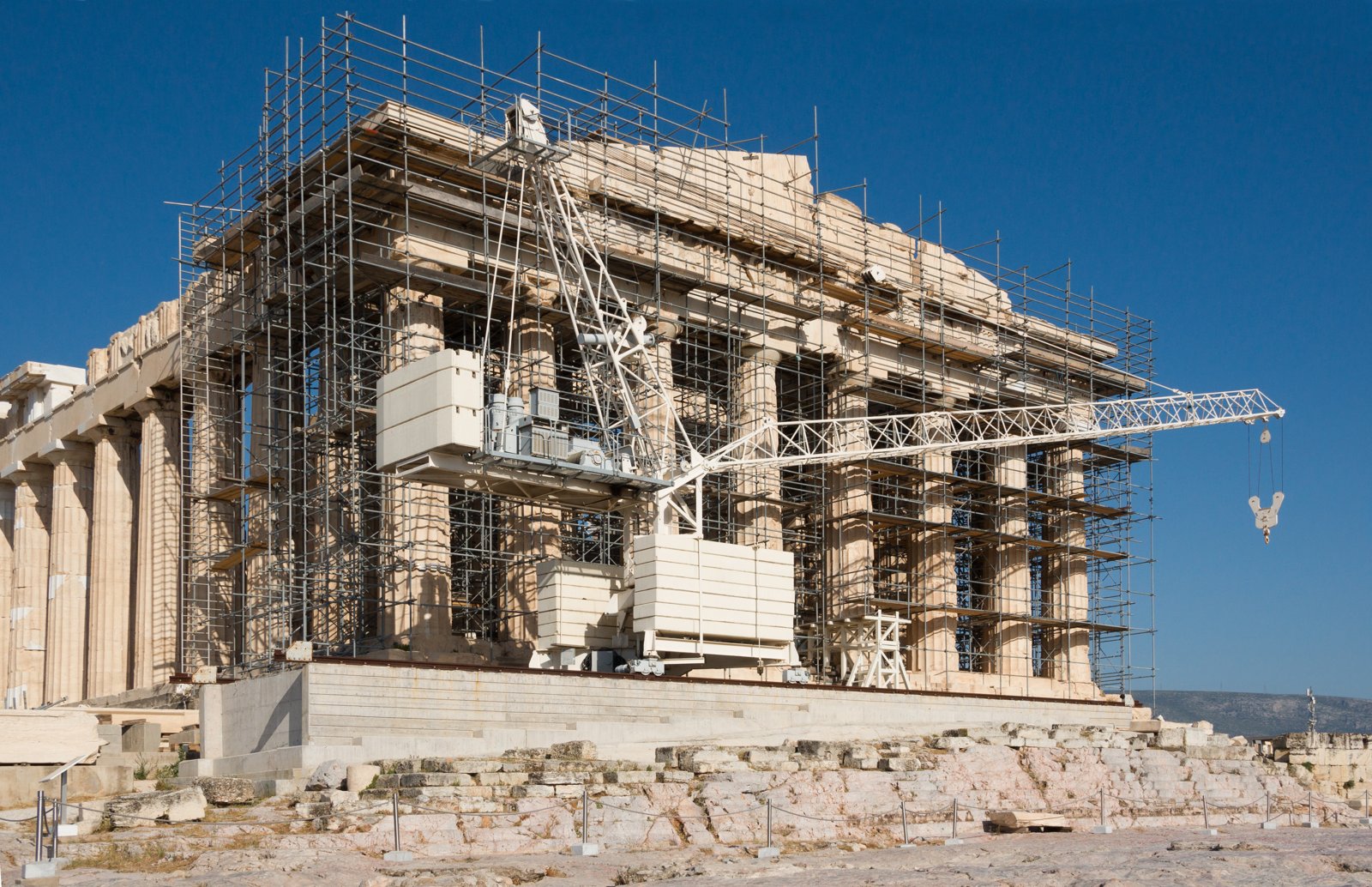
The Parthenon is the largest temple on that summit, built in the Periclean building program of the 440s–430s BC and dedicated to Athena. When people say "we went to the Parthenon," they almost always mean they went up to the Acropolis and saw the Parthenon there.
Other buildings people blur together
The Erechtheion (with the Caryatid porch) and the small Temple of Athena Nike are also on the Acropolis; they are not "the Parthenon." The Propylaea is the monumental gateway complex.
Nashville's full-scale Parthenon replica sits in Centennial Park; it copies the temple, not the Athenian hill. That replica is useful for sculpture/pediment study and useless as a stand-in for climbing the Acropolis.
For another architecture identity split on this site, see movement or building comparisons such as streamline moderne vs art deco when you need style rather than site hierarchy.
Visitor wording that stays accurate
Tickets and queues are for the Acropolis archaeological site. Photography rules, scaffolding, and which temple flanks are open change with restoration seasons; check the current Greek Ministry / Acropolis ticket pages before travel.
If a tour markets "Parthenon tickets" it usually means Acropolis entry with Parthenon viewing. There is no separate hollow Parthenon museum stroll analogous to walking inside a cathedral nave; the temple is a ruin under conservation.