A red pigment that came out blue
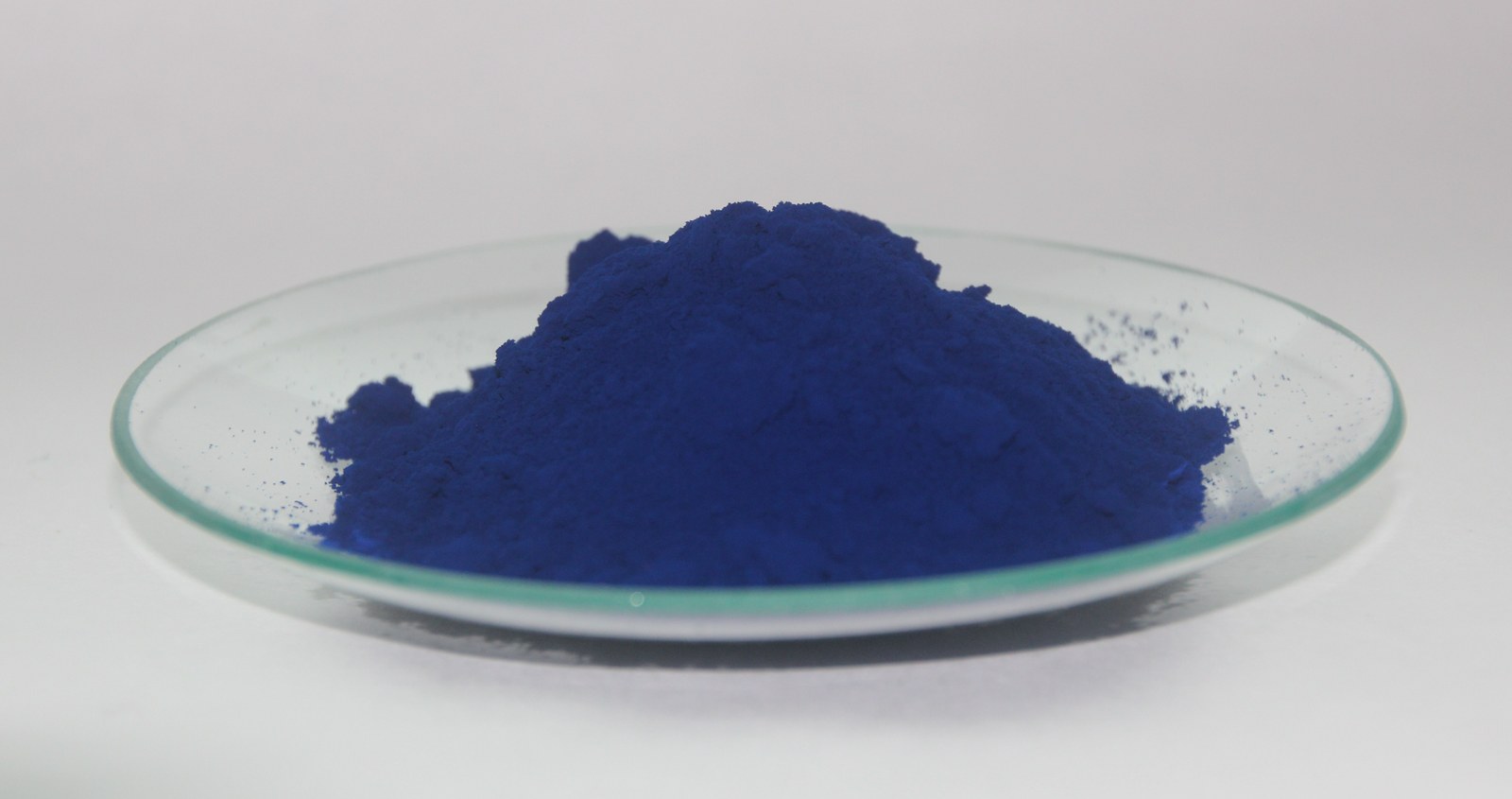
Sometime around 1704, a Berlin colormaker named Johann Jacob Diesbach was trying to make a red lake pigment, the kind of glaze produced by precipitating a dye like cochineal onto a base of alum and potash. The potash he used for that batch came from the alchemist Johann Konrad Dippel, who had previously used the same stock in distilling animal oil, a process that left it contaminated with potassium ferrocyanide without either man realizing it. When Diesbach combined the contaminated potash with iron sulfate and cochineal, the mixture that came out was not red at all but a dense, saturated blue.
Dippel recognized what had happened and saw a commercial opening in it. He and Diesbach refined the reaction and began selling the result as Berlin Blue, keeping the exact recipe secret for roughly two decades. That secrecy ended in 1724, when an English chemist reverse-engineered the process and published it, and from that point the pigment was available to any colormaker willing to make it. The American Chemical Society's own entry on the compound calls it the first modern synthetic pigment, assigning it the chemical formula Fe4[Fe(CN)6]3, iron bound to a cyanide-based complex that gives the color its unusual stability.
Forty livres against fifteen hundred
Before 1704, a painter who wanted a strong, stable blue had two real options, and both were expensive. Natural ultramarine, ground from lapis lazuli mined almost exclusively in Afghanistan, was so costly that painters sometimes billed it to patrons as a separate line item from their labor. Smalt, a ground cobalt glass, was cheaper but far less saturated and prone to fading. Prussian blue undercut both on price while matching or beating ultramarine on intensity, and price lists from eighteenth-century Paris studied by the art historians Charlotte Guichard, Anne-Solenn Le Hô and Hannah Williams in a 2023 Art History article show exactly how wide that gap was.
| Pigment | Paris price, per pound |
|---|---|
| Natural ultramarine (lapis lazuli) | 1,536 livres |
| Prussian blue, finest grade | 40 livres |
That is a gap of better than thirty-eight to one for the top grade of the new pigment, and cheaper grades of Prussian blue sold for even less. A separate English price list from 1750 shows the same pattern from a different angle: Prussian blue at five shillings a pound against ultramarine at twenty to thirty shillings an ounce, meaning a pound of ultramarine could run to several hundred shillings. For painters who had never been able to justify the cost of lapis lazuli, a strong, stable blue was suddenly within reach.
Through one trading post to a Japanese print
By the 1820s, Prussian blue had reached Japan, though only through a narrow channel: Dutch traders operating out of the artificial island of Dejima in Nagasaki harbor, Japan's single officially sanctioned point of contact with the West during this period. The Japanese print trade called the imported color bero, a shortened transliteration of Berliner Blau, and the publisher Eijudo began experimenting with it in prints during the late 1820s, replacing the duller, less stable blues, indigo and dayflower blue, that woodblock printers had used until then.
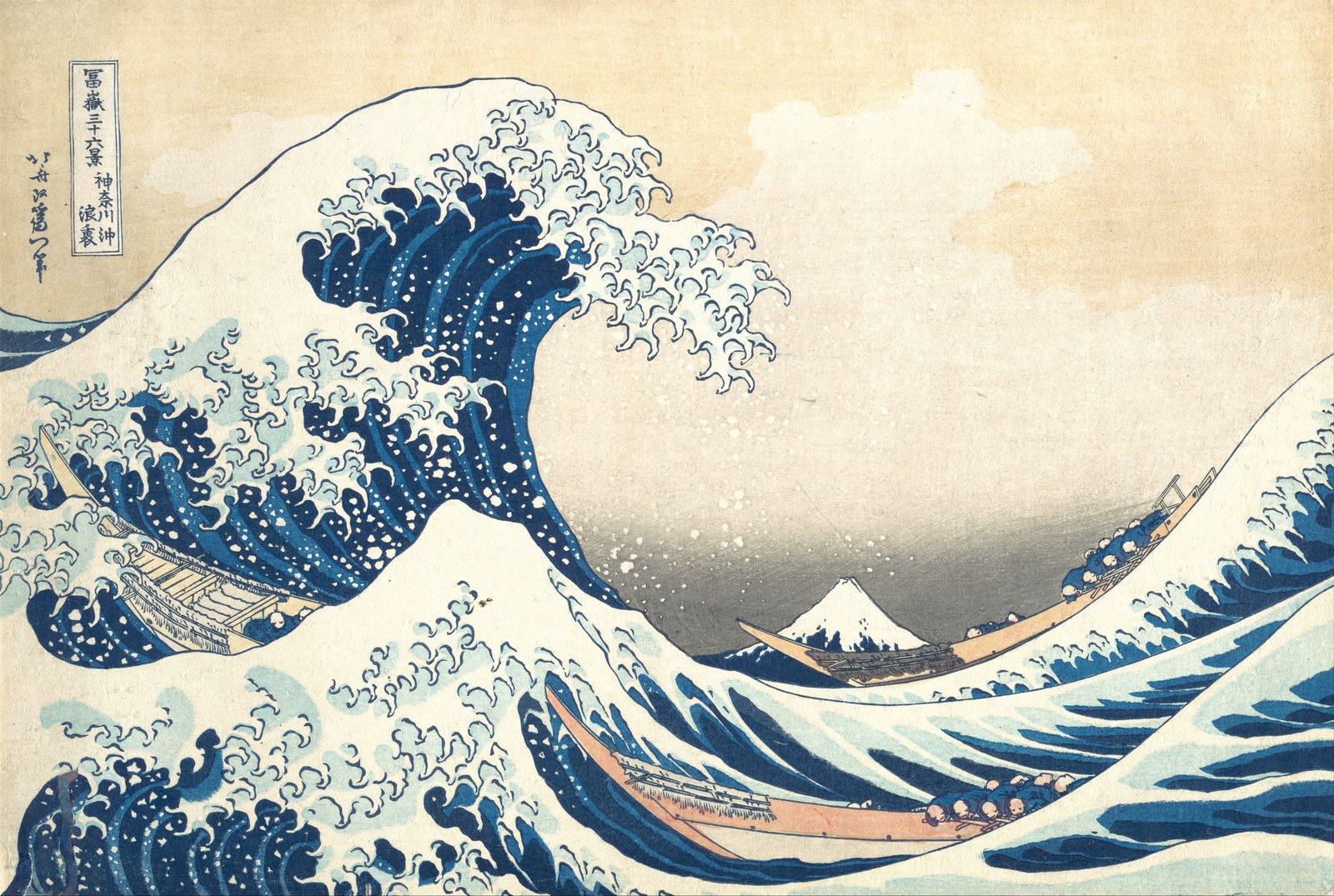
Eijudo timed a major release around the new pigment. Katsushika Hokusai's series Thirty-six Views of Mount Fuji went on sale for the New Year's market of 1831, and its best-known print, Under the Wave off Kanagawa, leaned on Prussian blue for its dynamic curling wave. Later spectroscopic analysis carried out by the Metropolitan Museum of Art found that the printers did not simply swap the new pigment in for the old one. They mixed Prussian blue with traditional indigo and layered the two inks to build a bold outline, darkening the bright synthetic blue without losing its intensity, a compositing choice a straightforward substitution would not explain.
On a painter's palette, and in a duelist's threat
By the nineteenth century, Prussian blue was a standard studio color, not a novelty. When a delivery of paint from Paris finally caught up with Vincent van Gogh in Arles in April 1888, he wrote to his brother Theo with an itemized list of what had arrived, naming Prussian blue alongside chrome yellows, emerald green and madder lakes as colors he said were "hardly found in the Dutch palette" he had trained on.
The pigment shows up in a stranger register in a letter from the painter Edward Burne-Jones, who testified for the critic John Ruskin at Ruskin's 1878 libel trial against James McNeill Whistler. Burne-Jones had carried his own grudge against Whistler since 1867, after Whistler struck his friend, the painter Alphonse Legros, in an unrelated quarrel, and the courtroom gave him a public confrontation in place of a physical one. Writing to a friend afterward, Burne-Jones said that if the dispute ever came to an actual duel, he would choose his weapon: "pots of oil paint," and specifically "prussian blue as the most effective weapon I know." No duel followed, but the line has outlived the quarrel that prompted it.
The same compound under four names
Prussian blue picked up a string of alternate names as it spread across markets and decades. Continental manufacturers sold it as Berlin Blue or Paris Blue. A separate reaction path, adding iron salts to a solution of ferricyanide, was once thought to produce a genuinely different pigment named Turnbull's Blue after the chemist who described it, until X-ray and electron diffraction studies showed the two materials share an identical crystal structure, differing only in impurities and particle size left over from their different starting reagents. Industrial suppliers today also sell a warmer, reddish-toned cooked variant under the name Milori Blue.
The name changed again, and for a different reason, inside a box of crayons. Crayola introduced a Prussian Blue crayon in 1949 and quietly renamed it Midnight Blue in 1958. The company's own explanation has varied over the years, pointing at different points to schoolchildren no longer recognizing what Prussia was and to a general Cold War-era wariness about a name that echoed the old Prussian and, by association, the divided German state on the far side of the Iron Curtain.
A museum pigment that is also an FDA-approved drug
The same chemical structure that makes Prussian blue useful on canvas also makes it useful in medicine, for an entirely unrelated reason. Insoluble Prussian blue binds strongly to metal ions, including the ions of radioactive cesium-137 and thallium. In October 2003, the Food and Drug Administration approved the first new drug application built on that property, marketed as Radiogardase, for treating people who have ingested harmful levels of those two elements.
Taken orally, the capsules work by intercepting cesium or thallium as it recirculates through the gut during the body's normal enterohepatic cycle, binding the metal ions and carrying them out in feces before they can be reabsorbed into the bloodstream. The FDA's approved dosing for adults and adolescents over twelve is three grams, taken three times a day, with constipation and upset stomach listed as the main side effects. A compound discovered by accident while someone was trying to dye something red is now stocked, under a completely different name, as an antidote.