A checklist that reads like natural law
Ask an art teacher to name the elements of art and the list comes back nearly identical everywhere: line, shape, form, space, value, color, texture. Wikipedia's own summary of the topic describes elements of art as "stylistic features that are included within a visual art piece to help the artist communicate," and lists "the seven most common elements" as "line, shape, texture, form, space, color and value," adding that some sources count mark making and materiality as an eighth and ninth term. The uniformity is the interesting part. Ask the same teacher where the list came from, who decided a shape and a form deserved separate entries, or why value gets counted apart from color, and the answers get much vaguer. Most people treat it the way they'd treat the alphabet: obviously true, with no origin worth asking about.
It has an origin. It is not old. It was assembled, piece by piece, by named people working in named years, as a direct reaction against how art had been taught for centuries before them.
The seven terms, briefly
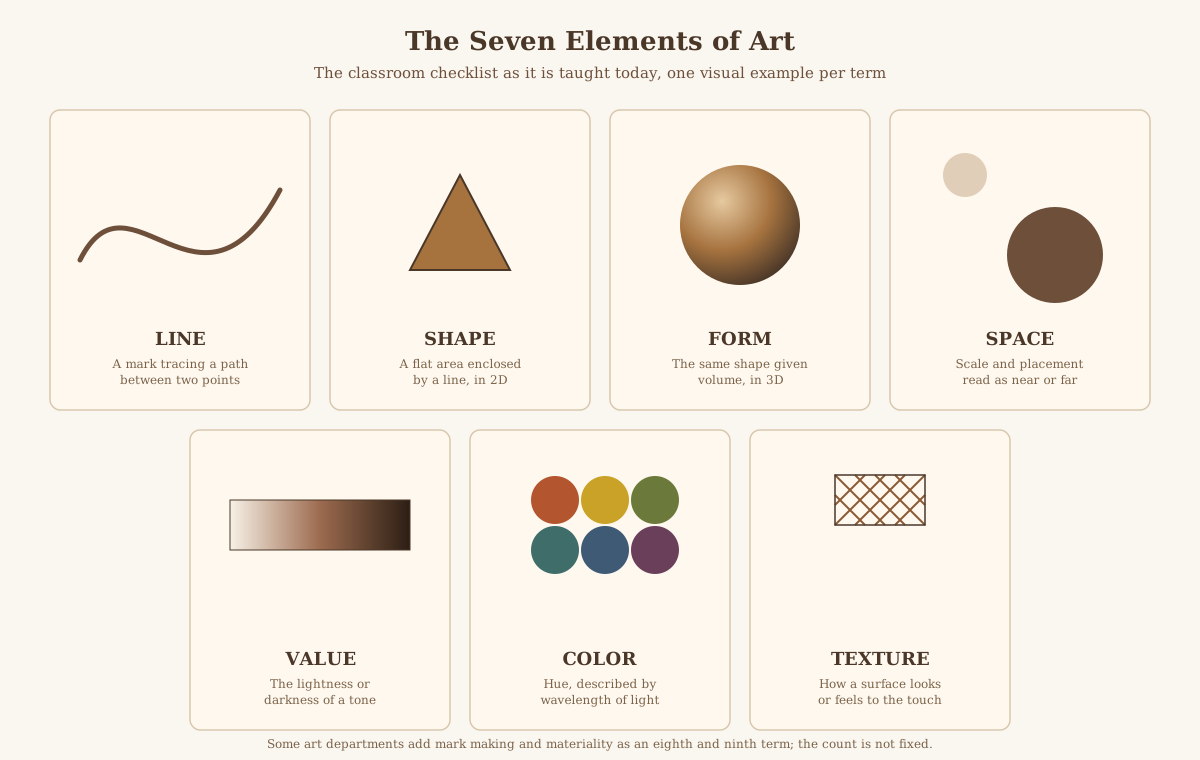
Museum wall text and Wikipedia agree closely on what each of the seven terms means, which is worth spelling out before getting into where they came from. Line is a mark tracing the path of a moving point, read by a viewer as direction, speed, and intention depending on how it curves or breaks. Shape is a flat, two-dimensional area enclosed by a line or a change in tone; give that same enclosed area height, width, and depth and it becomes form, the term reserved for objects with actual or implied volume, like a sculpture or a shaded sphere painted onto a flat canvas. Space describes how an artist manages perspective and proportion so some shapes read as near and others as far, including the negative space around a subject as well as the positive space it occupies. Value is the degree of lightness or darkness in a tone, independent of hue, running from white to black through every grey between. Color is that hue itself, defined by three properties, the specific color name, its intensity or chroma, and its own value, and built up through primary, secondary, and complementary relationships on a standard color wheel. Texture is the surface quality of a work, either tactile, something a viewer could actually feel on a sculpture, or purely implied through visual cues on a flat painted surface.
Some sources do not stop at seven. Wikipedia's own entry adds mark making, the visible trace of how an artist's hand moved across the material, and materiality, the specific physical substance chosen and what that choice does to a viewer's reading of the work, as an eighth and ninth term. That the count keeps shifting depending on which department or textbook is asked is itself evidence for the argument in the rest of this article: this is a teaching convention still being revised, not a fixed inventory handed down from antiquity.
1899: a teacher tries to replace copying with structure
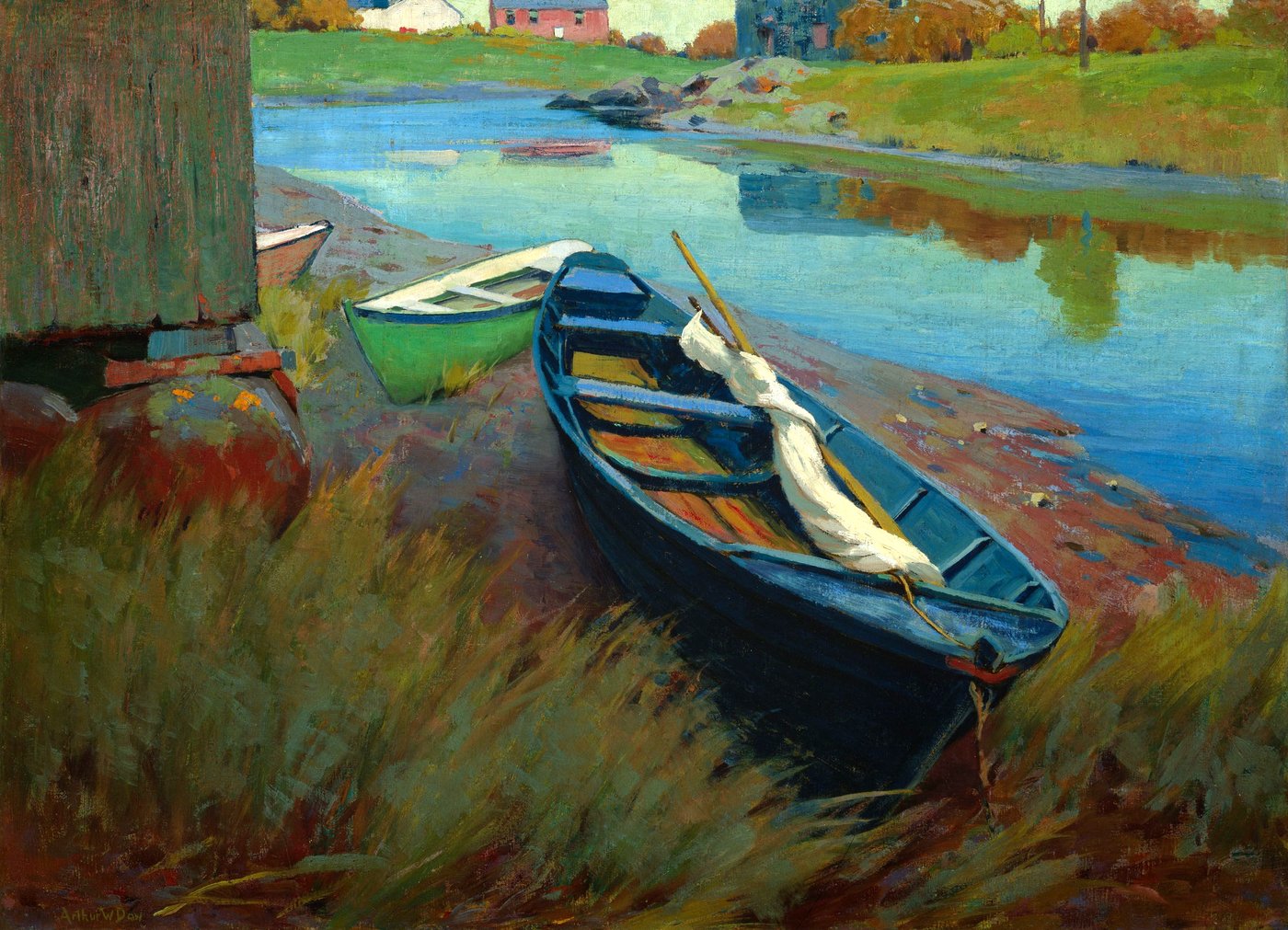
Arthur Wesley Dow trained as a painter in Paris in the 1880s and came home convinced American art instruction was teaching the wrong thing. The standard method held that a student became an artist by copying: plaster casts of classical sculpture, old-master paintings, nature rendered as exactly as the hand allowed. Dow's 1899 book, Composition: A Series of Exercises in Art Structure for the Use of Students and Teachers, rejects that method outright. "This approach to art through Structure is absolutely opposed to the time-honored approach through Imitation," he writes, arguing that schools built on copying were "gathering knowledge of facts but acquiring little power to use them."
In place of imitation, Dow proposed a short list of things a student could learn to see and control directly. His opening chapter names them: "In the space arts there are three structural elements with which harmonies may be built up: 1. LINE... 2. NOTAN... 3. COLOR." He defines the middle term with care, since it was the least familiar word to an American reader: "The term NOTAN, a Japanese word meaning 'dark, light', refers to the quantity of light reflected, or the massing of tones of different values." Notan is the direct ancestor of what today's lists call value, and Dow treated the massing of light and dark shapes, not outline, as the thing that actually holds a picture together.
Dow was not a fringe figure. In 1904 he became Professor of Fine Arts at Teachers College, Columbia University, a post he held until 1922, and Teachers College's own account of his tenure credits him with having "redirected the goals of public art education in the United States" from that position. His students and hires there included Georgia O'Keeffe, Max Weber, the photographer Alvin Langdon Coburn, and Clarence White. O'Keeffe first met Dow's method secondhand, at a University of Virginia summer course taught by his Teachers College colleague Alon Bement in 1912, then enrolled at Teachers College itself in 1914 to study under Dow directly. The radically simplified charcoal drawings she made the following year, the ones that earned her a show at Alfred Stieglitz's 291 gallery in 1916, came directly out of that training.
A parallel attempt at Harvard
Dow was not working alone. At Harvard, the painter and collector Denman Waldo Ross was building a parallel, more mathematical version of the same idea. His 1907 book, A Theory of Pure Design: Harmony, Balance, Rhythm, states its goal in almost scientific terms: "My purpose, in scientific language, is to define, classify, and explain the phenomena of Design." Ross split what he called Pure Design, the pursuit of harmony and order for its own sake, from Representation, the depiction of recognizable things, and built his analysis around dots, lines, and areas of tone and color rather than Dow's line-notan-color triad. One of today's standard principles, emphasis, is absent from these founding texts.
Where Dow wrote for art teachers, Ross lectured to Harvard undergraduates who would go on to run American museums and design schools. Both books came out of the same decade, aimed at the same underlying problem, using different terms to solve it. Neither man's list is the one printed in textbooks today, but both are the reason a formal vocabulary for describing a picture, rather than just praising or condemning it, existed in American art schools at all by the 1910s.
The Bauhaus turns three elements into a geometry
The next major rebuilding happened in Germany. Walter Gropius founded the Bauhaus in Weimar in 1919 around a required preliminary course, the Vorkurs, that put every incoming student through drills in materials, color, and formal composition before they specialized in a workshop. Wassily Kandinsky joined the Bauhaus faculty in 1922 to teach analytical drawing, and in 1926 he published Point and Line to Plane as the ninth volume in the school's own book series, the Bauhausbücher.
Kandinsky's book treats the elements almost as physics. "The geometric point is an invisible thing," he writes. "Therefore, it must be defined as an incorporeal thing. Considered in terms of substance, it equals zero." A line, in his system, is simply "the track made by the moving point," the record left behind once that zero-dimensional nothing is set into motion. Where Dow had grouped line, notan, and color as three practical tools for a painting student, Kandinsky proposed point, line, and plane as a near-geometric account of how any mark on a surface generates meaning and emotional force.
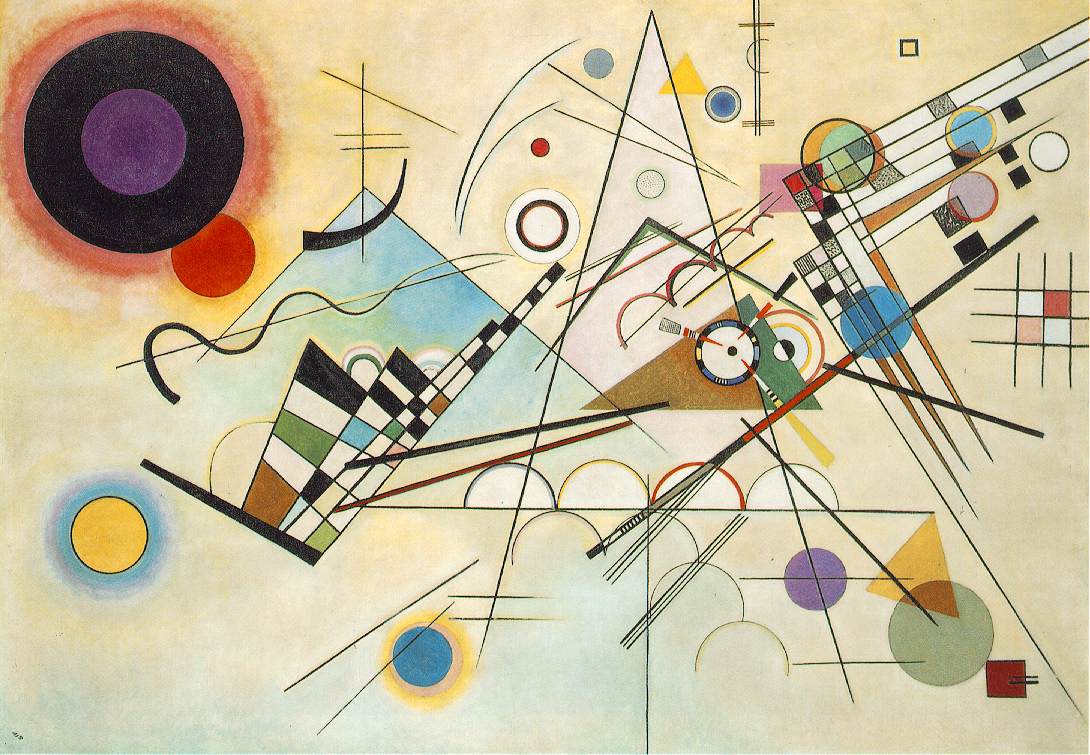
Kandinsky had already made the case in paint before he made it in prose. Composition 8, which he finished in July 1923, three years before Point and Line to Plane appeared, arranges circles, triangles, and crossing diagonals across a canvas with no representational subject at all, close to a direct illustration of the vocabulary he would spend the next few years writing down. Solomon Guggenheim bought it directly from Kandinsky's studio in Dessau in 1929, the first of more than 150 works by the artist Guggenheim would go on to acquire, and it now hangs in the museum that carries his name.
How American classrooms landed on seven
None of these three systems is the seven-item list taught in American classrooms today. Dow had three elements. Ross organized his book around dots, lines, and tone rather than a fixed count. Kandinsky had three of his own: point, line, plane. The specific seven-term checklist, line, shape, form, space, value, color, texture, is a later American synthesis, and it shows up on the historical record specifically in college textbooks written for studio-art foundation courses. The clearest example still in print is Otto Ocvirk's Art Fundamentals: Theory and Practice; the earliest copy of it held by the Internet Archive is a 1968 printing from the W. C. Brown Company in Dubuque, Iowa, and later editions carried the same seven-part structure into the 2010s. That book, not any single artist's manifesto, is where most people who ever took an introductory studio-art class actually encountered the version of the list now treated as standard.
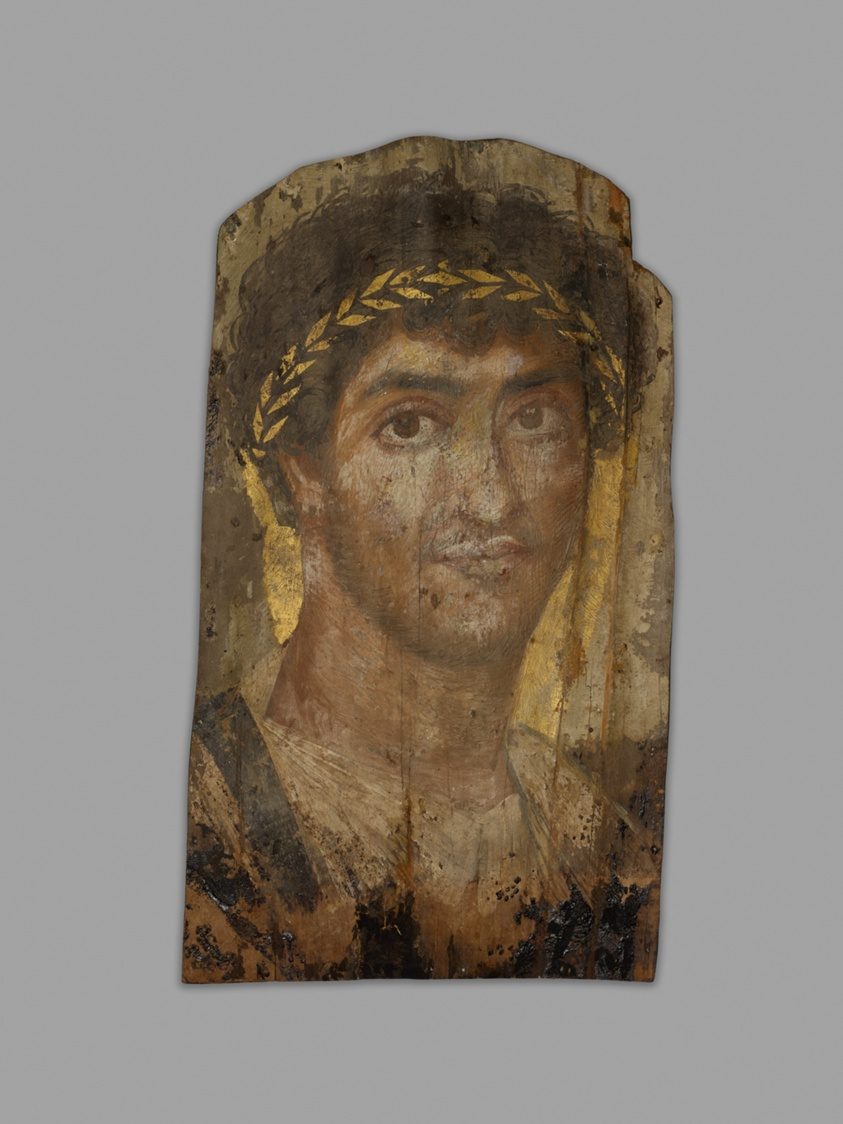
The gap matters. Nobody in 1899 or 1926 wrote down the exact seven words a museum guide or a search result gives you now. What each of those people actually produced was a different attempt, aimed at a different classroom, to solve the same problem: how do you talk about what makes a picture work without simply pointing at an admired painting and saying "do that"? The seven-item list won out in American schools not because it was more true than Dow's three or Kandinsky's three, but because it was the version textbook publishers kept printing, edition after edition, from 1968 into the 2010s. Not every widely repeated technical claim about old paintings holds up under testing, either: the "Punic wax" recipe long credited as the ancient medium behind the Fayum mummy portraits has never been confirmed by chemical analysis of an actual one.
What the history is actually good for
Knowing where the list came from changes how it's worth using. Treated as an inherited law, "the seven elements of art" invites the kind of rote naming exercise handed out in a ninth-grade art class: find the lines, find the shapes, move on. Treated as what it actually is, a set of specific, once-competing analytical tools built by people trying to solve the problem of teaching someone to see, it becomes closer to what the J. Paul Getty Museum calls formal analysis: a discipline for describing exactly how a picture produces its effect, not just naming its ingredients.
That kind of analysis is what actually happens when scholars test a painting against these terms seriously. Physicists checking whether the swirling sky in The Starry Night obeys the mathematics of real turbulence are running a rigorous version of what Dow meant by studying line and notan. Conservators tracking how the specific pigments Van Gogh could and couldn't buy changed his palette from one year to the next are doing exactly what a "color" unit gestures at, with the chemistry filled in. And the argument over which handful of paintings actually deserves credit as the first fully abstract picture is, underneath the attribution dispute, an argument about the same vocabulary Kandinsky was trying to pin down in Point and Line to Plane: at what point does a composition of pure point, line, and plane stop referring to anything else and start being only itself.
The number seven is not sacred. Some departments still teach Wikipedia's expanded version, with mark making and materiality folded in as an eighth and ninth term, and nothing in the history above suggests the count has finished settling. What is fixed is the reason the list exists at all: not to describe a fact about paintings, but to give a student, in any decade, a vocabulary specific enough to say something more useful than "I like it."