What "Hitler's art collection" usually means
The phrase covers more than paintings Hitler kept in private rooms. It includes works earmarked for the unrealized Führermuseum in Linz, Austria, plus pieces funneled through Nazi agencies such as the ERR (Einsatzstab Reichsleiter Rosenberg) and purchases or seizures under occupation. The German Historical Museum's Linz research presentation treats the planned museum as a centralized destination for a curated Nazi art program, not a finished gallery visitors can still tour [Deutsches Historisches Museum: Project Linz, checked 2026-10-26].
U.S. National Archives finding aids on Nazi-era cultural property explain how Monuments, Fine Arts, and Archives officers, OSS Art Looting Investigation Unit records, and later restitution files became the paper trail for what was taken and where it went after the war [NARA: Art Looting / Holocaust-Era Assets finding aids, checked 2026-10-26].
| Stage | What happened | Where to verify |
|---|---|---|
| Nazi acquisition | Purchase, confiscation, forced sale, or ERR seizure; many destined for Linz | DHM Linz project; wartime inventories |
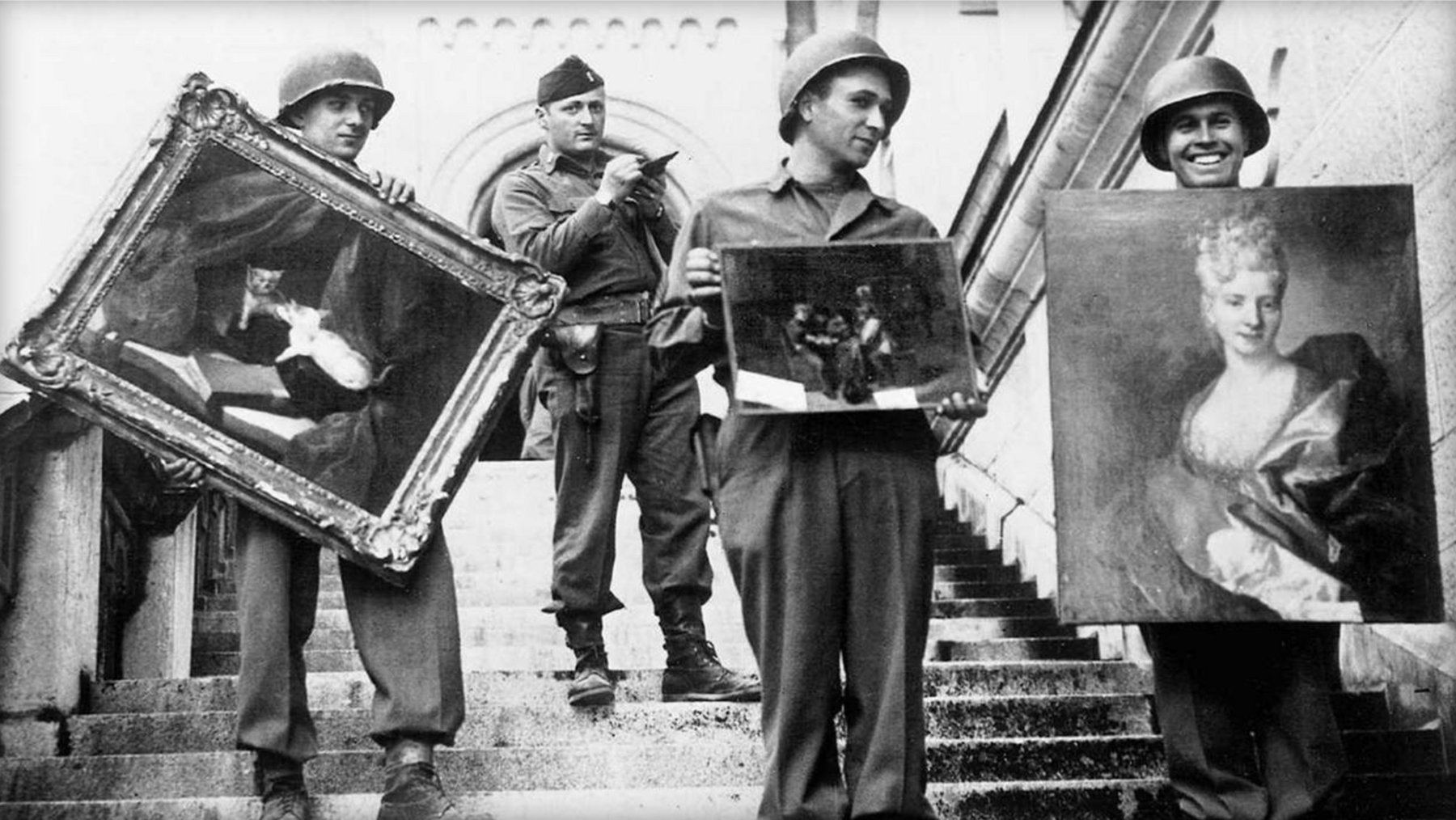
| Allied recovery | Caches found in mines, castles, and depots; MFA&A documentation | NARA MFA&A / ALIU records |
| Immediate postwar | Central collecting points; returns to countries of origin; some contested claims | NARA restitution files; national museum archives |
| Long tail | Museum provenance research; restitution lawsuits; database projects | Lost Art databases; museum provenance pages |
Personal apartments, gift exchanges, and agency depots all feed the popular phrase Hitler art collection. Historians still separate private display from the Linz museum shopping list because the legal and archival paths later diverge.
ERR card files, shipping lists, and photo albums created during seizures became evidence long after the war. Those bureaucratic traces are why researchers can still argue object-by-object even though the planned Linz galleries never opened to the public.
Linz never opened; the paperwork did
The Führermuseum project collapsed with the Nazi regime. Objects intended for Linz did not vanish as a sealed personal vault that somehow remains intact. Allied teams photographed, listed, and moved works through collecting points. Some works went back to prewar owners or national authorities; others entered state museums with incomplete provenance; still others remain disputed.
NARA's Holocaust-era assets research pages and related finding aids are the English-language starting point for U.S.-held microfilm and digital records on looting investigations. German institutions such as the DHM publish research syntheses on the Linz destination concept itself [NARA Holocaust-Era Assets research; DHM Project Linz, checked 2026-10-26].
Umberlore's broader Nazi-era art pages (when present in the guide index) and this Linz-focused note share one rule: name the archive or museum project, not a rumor about a single hidden vault.
Central collecting points in the U.S. zone (including famous depots discussed in Monuments Men literature and NARA finding aids) sorted works for return to countries of origin when ownership was clear enough. Incomplete paperwork sent other objects into longer museum custody with provenance research still open decades later.
German institutions continue Linz-related research projects that reconstruct intended inventories rather than celebrate a finished museum. DHM Project Linz is one public-facing synthesis; object-level claims still need object-level cites.
How to evaluate a claim about a specific painting
Ask for a prewar owner, a wartime seizure or sale record, a collecting-point number, and a postwar restitution decision. Social posts that only say "Hitler owned it" without a catalog or archive cite are not enough.
Check whether the work appears in published Linz inventories, ERR card files, or national Lost Art listings. Museum provenance statements often cite those tools even when the conclusion is "still under research."
Restitution law and museum ethics have changed since 1945. A mid-century return decision does not automatically settle a twenty-first-century claim; treat each object as its own file.
Auction catalog glamour language (from the collection of) is not a provenance proof. Ask whether the catalog cites a wartime inventory number, a collecting-point receipt, or a postwar restitution decision.
Heirs, museums, and states may disagree even when the wartime path is partly known. Treat unsettled files as unsettled; do not launder them with a single viral sentence.
Dated high-level timeline
Dates below are orientation markers for the program story, not a complete object ledger.
| Period | What researchers track |
|---|---|
| 1930s-early 1940s | Purchases, confiscations, and agency seizures feed Linz planning and other Nazi collections |
| Wartime peak | ERR and related offices move art across occupied Europe; inventories and photos accumulate |
| 1945 | Allied advances recover caches in mines, castles, and depots; MFA&A documentation intensifies |
| Immediate postwar | Central collecting points; returns to countries of origin; contested claims begin |
| Late 20th c. onward | Museum provenance research, databases, and restitution cases continue object by object |
The timeline answers what happened to the collection as a program. It does not tell you where one painting hangs today. For that, jump to object research steps.
Popular films and novels compress years of depot work into a few heroic scenes. Use them as interest hooks, then open NARA or museum provenance pages for file-level truth.
Object research checklist
Pass/fail steps before you share a claim that a work belonged to Hitler or was destined for Linz.
| Step | Evidence to gather | Fail mode |
|---|---|---|
| 1 | Name the work and artist precisely | Vague old master fails |
| 2 | Find a prewar owner or dealer record | Story starts in 1945 fails |
| 3 | Locate wartime seizure, sale, or ERR-style documentation | Rumor only fails |
| 4 | Locate collecting-point or restitution file identifiers when claimed | No file number and no archive cite fails |
| 5 | Read the current museum or claimant provenance note | Ignoring living disputes fails |
Start English-language research at NARA Holocaust-era art looting finding aids, then branch into national Lost Art portals and museum provenance pages. DHM Project Linz explains the destination concept you will see named in many files.
Umberlore will not invent vault coordinates or secret surviving museum rooms. If a social post needs those to stay exciting, it is entertainment, not a cite.
When two archives disagree, quote both and date your check. Quiet disagreement is normal in restitution research; fake certainty is the integrity failure.
Caches, depots, and why no single vault remains
Allied recovery stories often highlight salt mines and castle storerooms because those sites held dense concentrations of evacuated art. MFA&A officers photographed stacks, labeled crates, and moved works toward collecting points. That paperwork trail is the opposite of a sealed personal vault myth.
Some objects were destroyed in bombing or transport; some were stolen again in the chaos; some entered private hands with thin receipts. Absence from a modern database is not proof of a still-secret Hitler room. It may mean incomplete digitization, destroyed records, or an unresolved private holding.
National archives and museum provenance teams publish finding aids precisely because the corpus is scattered. NARA art-looting guides and DHM Linz research are gateways into that scatter, not tourist maps to a remaining gallery.
Journalists sometimes ask where the collection is now as if it were one crate. Answer by refusing the premise: the program dispersed into returns, museum holdings, private sales, losses, and open claims. Then offer the object checklist in the previous section.
Restitution ethics statements from museums (Washington Principles era and later national guidelines) changed how institutions describe gaps. A label that says provenance incomplete is often progress compared with mid-century silence, not a scandal by itself.
Umberlore keeps this page at program literacy: Linz destination, loot pathways, Allied recovery, long-tail research. Object-level drama belongs in cites attached to that object.
How viral claims usually fail
Fail pattern 1: a painting photo with caption Hitler owned this and no inventory number. Fail pattern 2: conflating any Nazi-looted work with the Linz shopping list. Fail pattern 3: treating a postwar Allied collecting-point stamp as proof of prewar private ownership by Hitler personally.
Fail pattern 4: citing a novel or film as if it were NARA. Fail pattern 5: assuming restitution finished in the 1940s so modern claims must be fake. Fail pattern 6: assuming every modern claim is automatically true without files.
Counter-pattern: quote the archive, date the access, separate Linz-intended from other agency seizures, and leave unsettled files marked unsettled.
If you only remember one sentence from this guide, remember this: the Führermuseum never opened, and the paper trail did.