The name comes from a shipping stopover, not a workshop
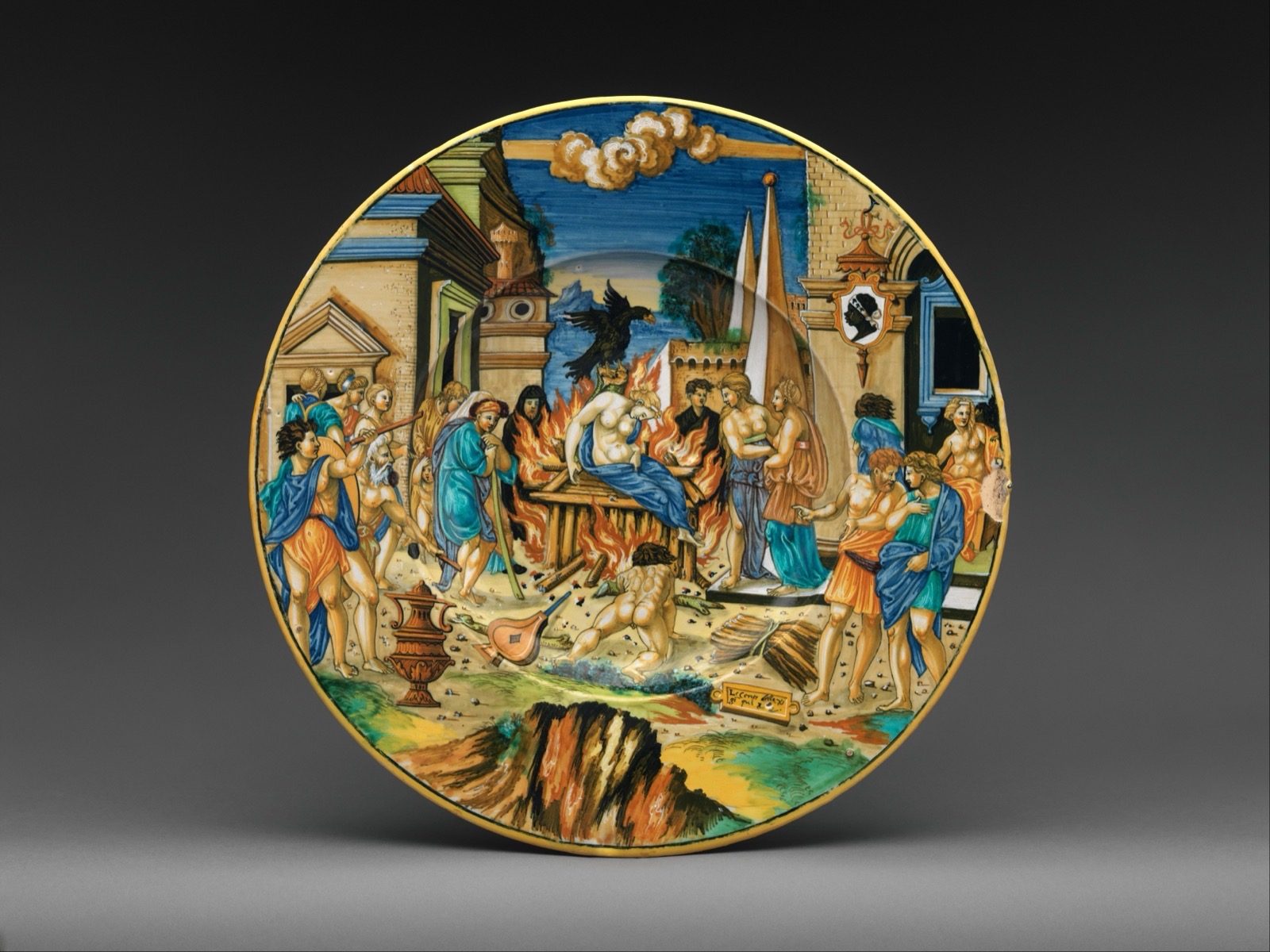
Maiolica is a tin-glazed earthenware technique: potters coat a fired clay body in a glaze made opaque and white by adding tin oxide, then paint directly onto that unfired white surface before a second firing sets both the glaze and the color together. The result is a smooth, bright ground that takes pigment the way paper takes ink, which is what let Renaissance workshops paint whole narrative scenes across a single dish. The technique itself did not originate in Italy. According to Britannica's account of Hispano-Moresque ware, tin-glazed pottery production in Spain was centered in Malaga through the 14th century, with Valencia and its satellite towns of Manises and Paterna taking over as the main production centers by the end of the 15th.
The name that eventually attached to the Italian version of this technique does not come from where it was made. It comes from where it was shipped. Spanish tin-glazed wares exported from Valencia to Italy from around 1400 onward routed through the island of Majorca, a midpoint trading stop between the two coasts, and Italian buyers came to refer to the imported pottery by the name of the island it passed through rather than the Spanish towns that actually produced it. "Maiolica," the word Italian potters eventually applied to their own imitations of the technique, preserves a stopover on a trade route, not a place of manufacture.
Italy had its own maiolica within a generation, and a labor dispute in the middle of it
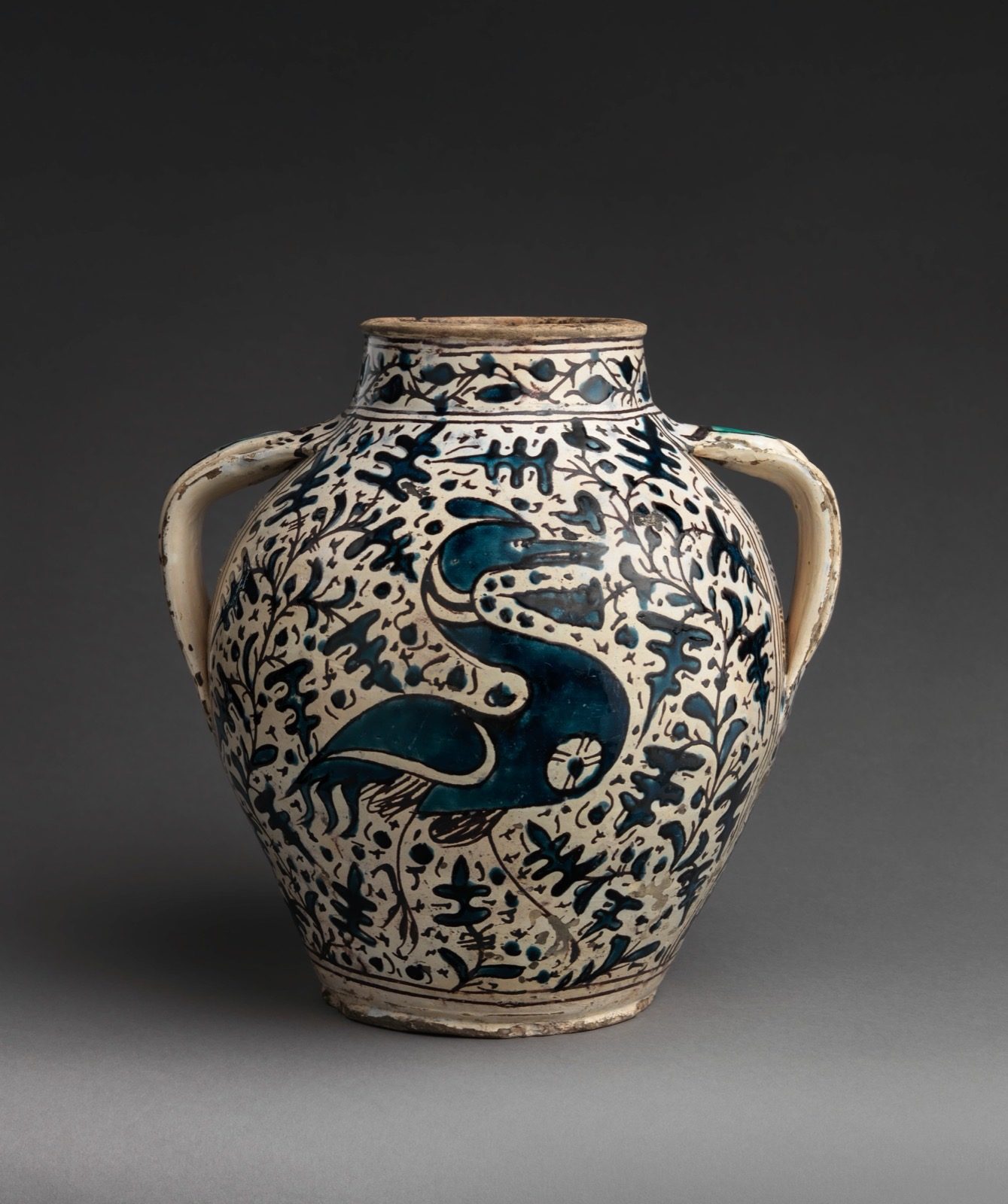
Italian workshops were producing their own tin-glazed wares well before the Renaissance flowering usually associated with the technique. An apothecary jar in the Metropolitan Museum's Robert Lehman Collection, attributed to the workshop of the Florentine potter Giunta di Tugio and dated by the museum to probably 1431, is described in the Met's object record with the medium "Maiolica (tin-glazed earthenware)," placing organized Italian production within a few decades of the Spanish imports that inspired it, not centuries behind.
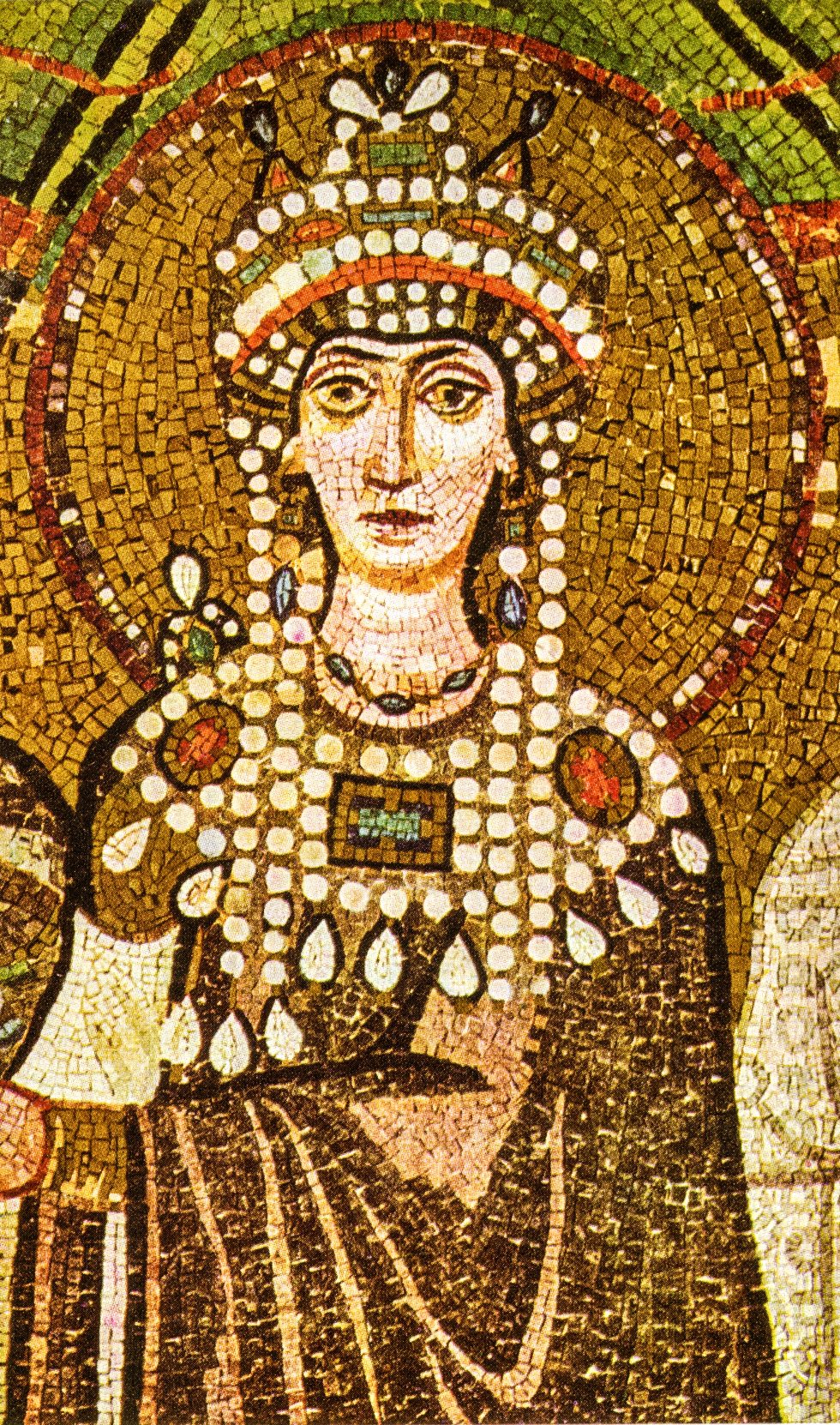
By the early 16th century, istoriato painting, dishes and plates covered edge to edge with narrative scenes rather than simple ornament, had become the technique's signature Italian achievement, produced in workshop centers including Deruta, Faenza, Gubbio, and above all Urbino. The best-documented istoriato painter, because he signed and dated an unusually large share of his own output, is Francesco Xanto Avelli da Rovigo. Wikipedia's account of his career notes that he is first recorded as working in Urbino in 1530, named in a notarial document describing an attempt by a group of pottery workers, the interlaboratores artis figuli, to form an early trade union to raise wages. That same year is the date on Xanto's earliest signed piece, and his habit of consistently signing and dating his work afterward is unusual enough for the period that some historians have connected it to the labor trouble, on the theory that a potter who had been blacklisted had reason to make sure his surviving work could be traced back to him. Two years later, in 1532, Xanto painted a dish bearing the arms of the Pucci family, now held by the Metropolitan Museum of Art with a credit line tracing it to the 1931 bequest of Michael Friedsam, a documented path from a Renaissance Urbino workshop into a New York museum collection that is itself part of what makes the object's history checkable rather than assumed. A decorative medium's finest surviving examples don't always sit where the technique was first perfected, either: the best-preserved sixth-century Byzantine mosaics anywhere are in Ravenna, Italy, preserved largely because the city had already slipped out of Byzantine control before the empire's harshest iconoclasm began.
A different glaze borrows the name, 1849 to 1851
The gap between Renaissance maiolica and the pottery most people picture when they hear "majolica" today is more than three centuries wide. In 1848, the French ceramic chemist Leon Arnoux, trained at Sevres, arrived in Stoke-on-Trent and was hired by Herbert Minton. Arnoux's contribution was not a revival of tin-glaze painting. He developed a new range of richly colored lead glazes that could be fired directly onto relief-molded earthenware bodies without the colors bleeding into one another during firing, a different chemical process from tin-glaze work applied to a flat painted surface.
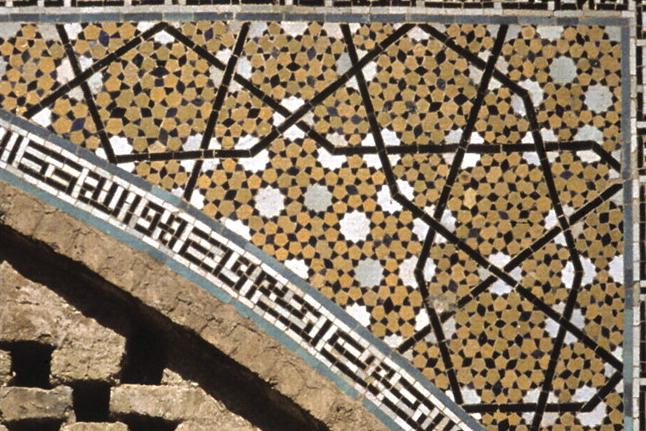
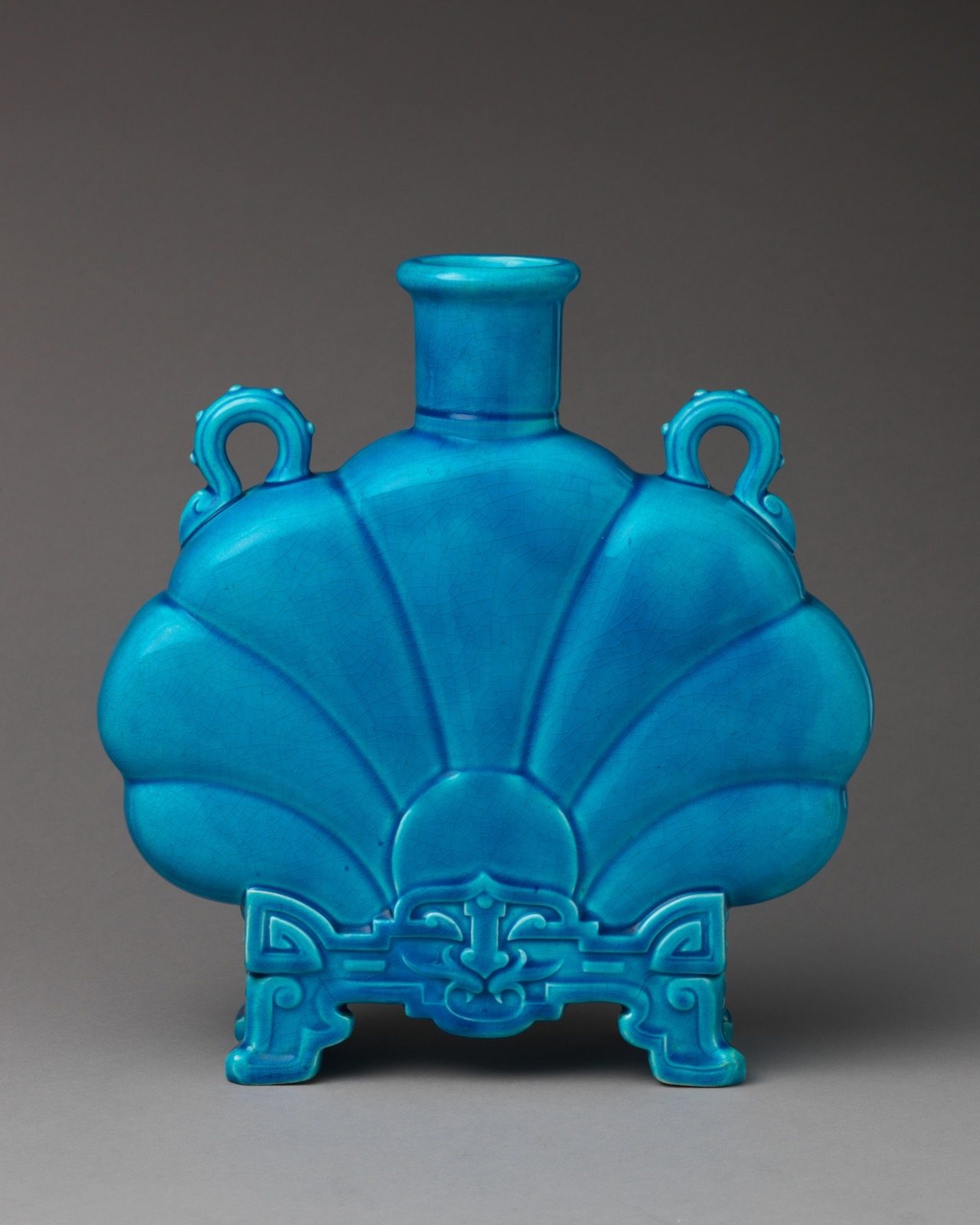
Minton exhibited the result at the Great Exhibition of 1851, initially under the name "Palissy ware," after the 16th-century French potter Bernard Palissy, whose own naturalistic lead-glazed relief work with life-sized lizards and shells was one of Arnoux's acknowledged models. The name that stuck, within the same period, was "majolica" instead, borrowed from the older Italian technique despite the chemistry underneath being closer to Palissy's lead glazes than to any tin-glazed ground. The Victoria and Albert Museum's own collection record is direct about which part of the borrowing was real: Minton's majolica ware consisted of "ceramics decorated with bold, colourful lead glazes inspired by the bright colours of Italian 'maiolica' and Renaissance ceramicists Luca Della Robbia and Bernard Palissy." Inspired by the colors, not a continuation of the technique. The V&A's record adds that the ware won the Council medal at the 1851 exhibition and became popular with both Queen Victoria and the general public. A Minton bottle from about 1870, now in the Metropolitan Museum's collection, is catalogued with a medium description that states the underlying chemistry plainly: "Lead-glazed earthenware ('Minton's Majolica')." Decoration's status can run in the opposite direction too, from overlooked to structural: a funeral krater, a 1453 Islamic tile spandrel, and a Victorian textile design all use repeated pattern as something closer to a building block than filler.
What the borrowed color was hiding
The same lead chemistry that gave Minton's glazes their saturated color was hazardous to produce. According to the Minton Archive's account of the factory's history, majolica glazes ran roughly 40 to 60 percent lead by content, applied by hand by workers known in the trade as dippers. Lead poisoning among pottery workers produced a documented set of symptoms: "dropped wrist" and "dropped ankle," a form of nerve paralysis, along with stomach disorders, miscarriages, anaemia, and epilepsy, with some cases fatal.
The campaign against this hazard is independently documented outside the pottery industry's own trade records. Gertrude Tuckwell, an official of the Women's Trade Union League, organized a meeting in April 1898 at the Workers' Church in Hanley, one of the six towns that make up Stoke-on-Trent, which founded a reform committee that stayed active for the next fifteen years, according to Trades Union Congress archive records. The League ran a Potteries Fund that paid for an officer to live in Staffordshire supporting affected workers directly, and its Potteries Fund Register recorded medical details for 217 of 328 lead-poisoning cases its visiting officer investigated around 1899. Legal reform followed slowly and in stages rather than all at once. The Pottery (Health and Welfare) Special Regulations 1950, a UK statutory instrument made on 16 January 1950 and in force from 2 April that year, replaced separate regulations dating back to 1913 and 1932, and set the first legal definitions of a "low solubility glaze," one yielding no more than 5 percent soluble lead by dry weight under a dilute hydrochloric acid test, and a "leadless glaze," containing no more than 1 percent lead compound by dry weight. Getting from Arnoux's 1849 glaze formula to a legally enforceable lead limit took a full century.
Telling the two apart today
Ceramics specialists now generally reserve the Italian spelling, maiolica, for the Renaissance tin-glazed technique, and the English spelling, majolica, for the Victorian and later lead-glazed relief ware, a convention that hardened only after the two names had already been used interchangeably for decades. The distinction is visible as well as etymological. Renaissance maiolica is essentially flat-painted, a smooth white surface carrying pigment the way a painted panel does, with the decoration sitting on top of the glaze rather than shaping it. Victorian majolica is sculptural, its color pooling and darkening inside the folds of a relief-molded leaf or shell the way water collects in a real one, because the glaze itself is following a molded three-dimensional form rather than a flat painted surface.
A similar gap between an assumed technique and what the documented record actually supports shows up in the wax recipe long credited as the ancient medium behind the Fayum mummy portraits, which a 2020 chemical analysis found no confirmed trace of in an actual painting; majolica's version runs through a factory ledger and a trade union archive rather than a conservation lab, but the underlying mistake, a name and a process assumed to have traveled together when they hadn't, is the same shape. Reputation can swing the opposite way just as fast: Chinese antiquarians dismissed cloisonné enamel as unfit for a scholar's studio in 1388, only for the same technique to become an imperial treasure within about forty years, a reminder that a decorative craft's status, like its name, is rarely as stable as the finished object makes it look.