The picture that left the oratory
The Nativity with Saint Francis and Saint Lawrence is a late Caravaggio, dated 1609, the year before he died. English Wikipedia (checked 2026-10-29) describes an oil on canvas about 268 by 197 centimetres, painted in Sicily and then placed in Palermo. Mary, the infant, Saint Francis, and Saint Lawrence are the figures the title names. It hung over the altar of the Oratory of San Lorenzo.
On the night of 17-18 October 1969 two thieves cut the canvas out of that frame. Wikipedia, citing the investigation record as usually summarized, says they also took a carpet, which authorities believe was used to roll the painting. The empty frame stayed in the oratory. A photograph by Enzo Brai, enlarged and faded, occupied the space for years. Factum Foundation's project page describes that enlargement as what a visitor saw on entering: a book-plate blown up to altar size.
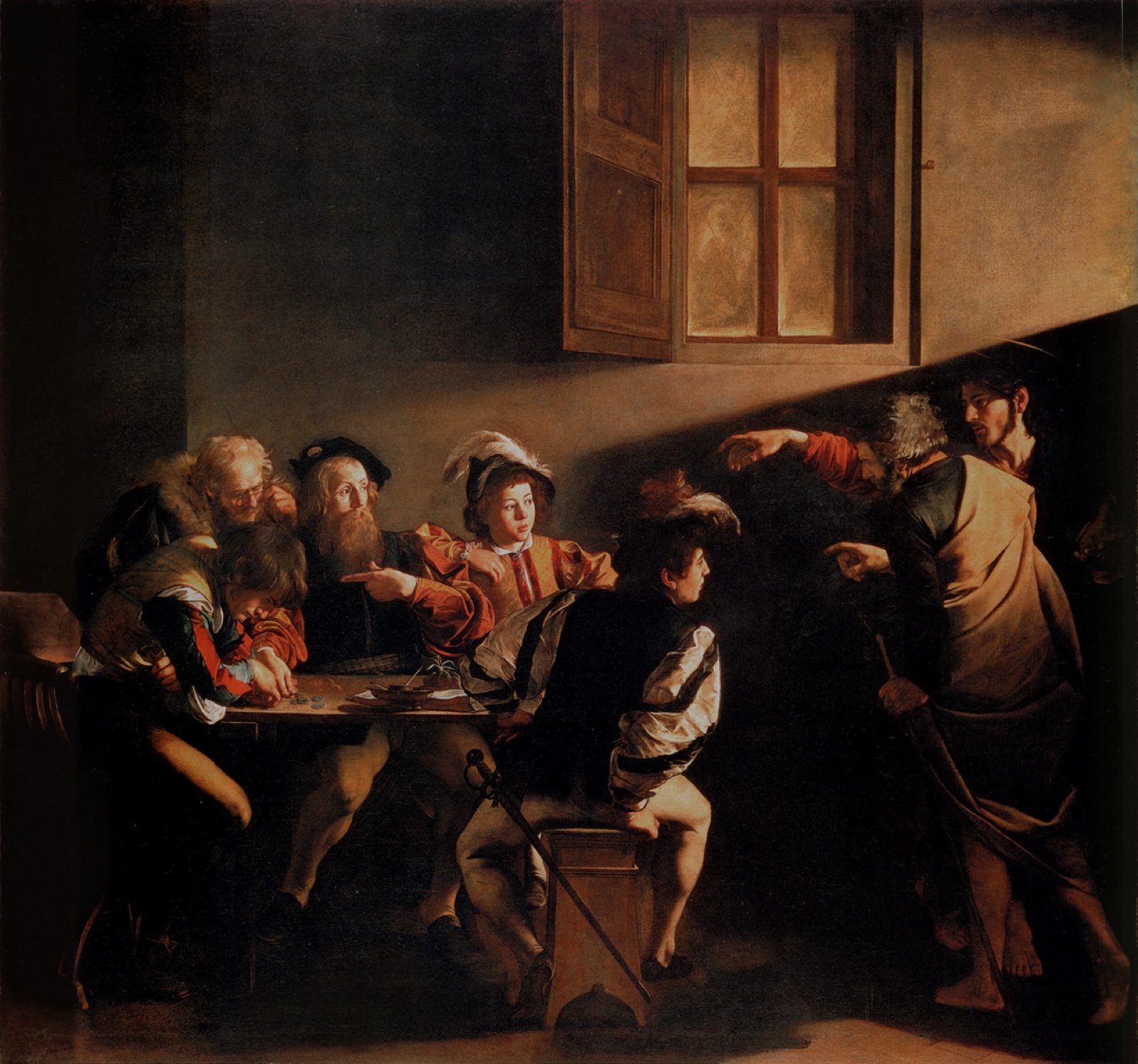
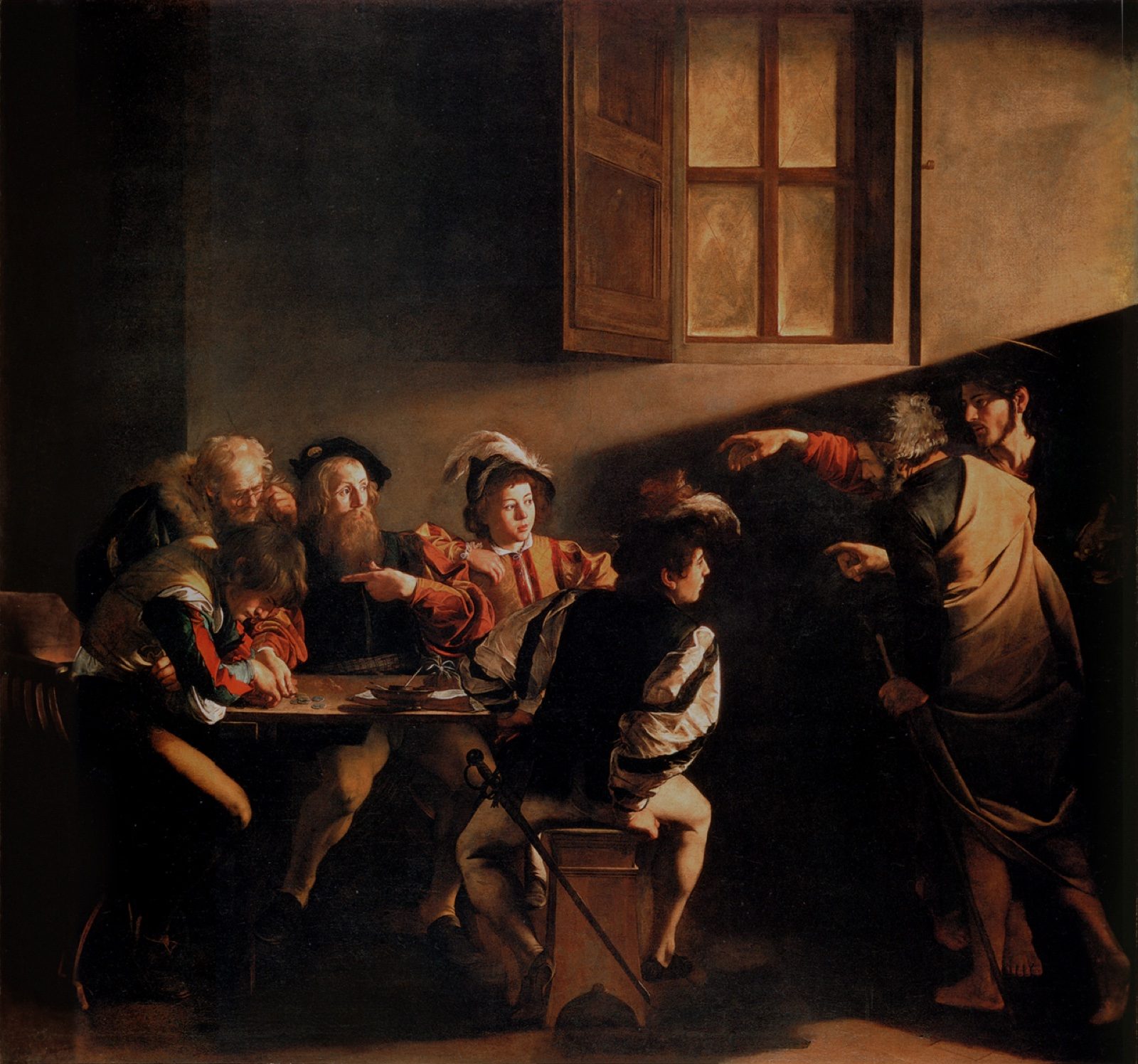
The photograph at the top of this article is not that painting. It is The Calling of Saint Matthew (1599-1600), still in San Luigi dei Francesi in Rome, the canvas discussed on the Baroque paintings page. Factum used scans of the San Luigi dei Francesi Saint Matthew cycle, plus Brai's blurred colour slide and black-and-white photographs, to build the 2015 replica. The original Nativity is not a file this site can reproduce, because nobody can point to the canvas.
Three accounts of where it went, and none closes the file
Wikipedia's summary of the case (checked 2026-10-29) is a stack of informant stories that do not agree.
In 2005 Francesco Marino Mannoia told investigators he had taken part in a commissioned theft. In that version the private buyer wept and cancelled the purchase when he saw the damage from the cutting. Mannoia did not give a current location. A Carabinieri art unit in Rome has treated that memory as a different painting, and has argued instead that amateurs stole the Nativity after a television programme named its value, that the oratory was watched by an elderly custodian, and that the Mafia took the canvas off the amateurs afterwards. In that telling the picture passed among bosses, including Rosario Riccobono and Gerlando Alberti, and a nephew later showed police a burial spot that held no painting.
In 2009 Gaspare Spatuzza said that Filippo Graviano, speaking to him in prison in 1999, claimed the canvas had been destroyed in the 1980s. The version Spatuzza reported puts it with the Pullara family in a Palermo barn, where rats and pigs ruined it, after which it was burned. The FBI had listed the Nativity among its top ten art crimes in 2005. Italian authorities at that time were still saying it was hidden in Sicily, between Palermo and Bagheria.
This page does not pick a winner among those stories. A commissioned theft that was refused, an amateur theft the Mafia intercepted, and a barn fire cannot all be the whole truth. What they share is that no museum has the canvas back. Reported valuations in the same Wikipedia summary run to about $20 million and about £20 million, with the usual warning that a black-market price would be lower. Those figures are estimates in secondary write-ups, not an auction result.
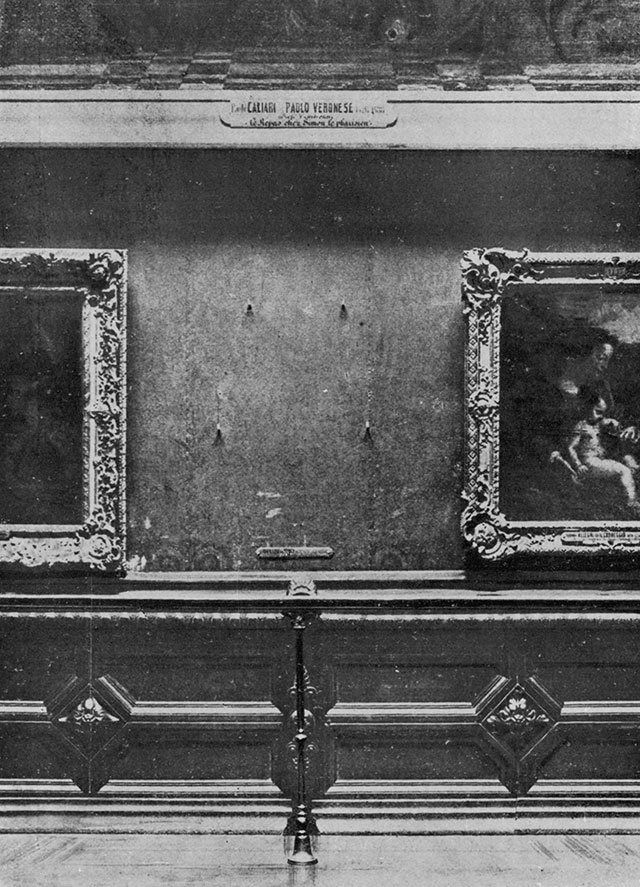
A theft that did end with the object back on its wall is a different ledger: the Mona Lisa was stolen once, in 1911, and returned. Counting soup thrown at glass as extra thefts is how that number gets inflated. The Palermo Nativity is the opposite shape. It left, and the return has not happened.
What hangs in the oratory now
On 12 December 2015 a replica went up in the niche above the altar. ANSA reported that Sky paid for a single copy, about €100,000, made by Factum Arte, and gave it to the Italian presidency. President Sergio Mattarella handed it to the oratory and called it a sign of legality against theft, not a recovery of the original canvas. Adam Lowe of Factum said the replica was built from Brai's slide, black-and-white photographs, and digital scans of the Saint Matthew triptych in San Luigi dei Francesi. He also said the copy was not meant to replace the original.
The Guardian's report the same week described the 1969 theft as still one of the worst art crimes on record, and the replica as Sky's project. Factum's own page is the technical account: the empty frame had been a witness to the absence, and the faded photographic blow-up was what the replica replaced.
A different Caravaggio problem, still in a Roman gallery, is authorship rather than theft. Narcissus at Palazzo Barberini has been argued between Caravaggio and the painter called lo Spadarino since the twentieth century. That canvas can be visited. The Palermo Nativity cannot, except as the 2015 copy.